Underground Music and the Tunisian Revolution
 This blog is about Egypt but very occasionally I stray from the main topic to discuss issues related to the Arab uprisings outside of Egypt. This is one of those times.
Underground Music and the Tunisian Revolution is the final project by Alex Underwood as his Departmental Honors project in anthropology, supervised by yours truly, and created in conjunction with his participation in the Altman Undergraduate Fellows Programs here at Miami University.
This is essentially a processual analysis, drawing on the work of Mary Douglas and Victor Turner, arguing that Ma’aluf, Rai and Hip-Hop in Tunisia all emerged as hybrid forms of music that have undergone similar cycles of expressing popular resistance against political domination, then gradually being absorbed into the social structure, requiring the emergence of a new form of resistant music.
In each case, the historical context, the nature of the hybrid influences, the extent to which the resistant potential of the music was realized, and the extent to which the music was mainstreamed has been different. It’s a very interesting argument.
What’s also cool is the way Alex articulates his argument in multimedia. The main argument is expressed in a self-guided presentation created using Prezi, allowing viewers to read, view and listen to music and (very brief) analytical texts. For those wanting more information than can be expressed in the bullet-point format of the presentation, he has included links to articles on external web sites, including a WordPress blog on Tunisian music he wrote in conjunction with this course. Finally, the presentation culminates in a 7-minute video, also available on YouTube, that summarizes the entire argument without jargon (and which was, essentially, the final project for the Altman Fellow part of the course).
Here’s the video:
New Journal Issue on Arab Popular Culture
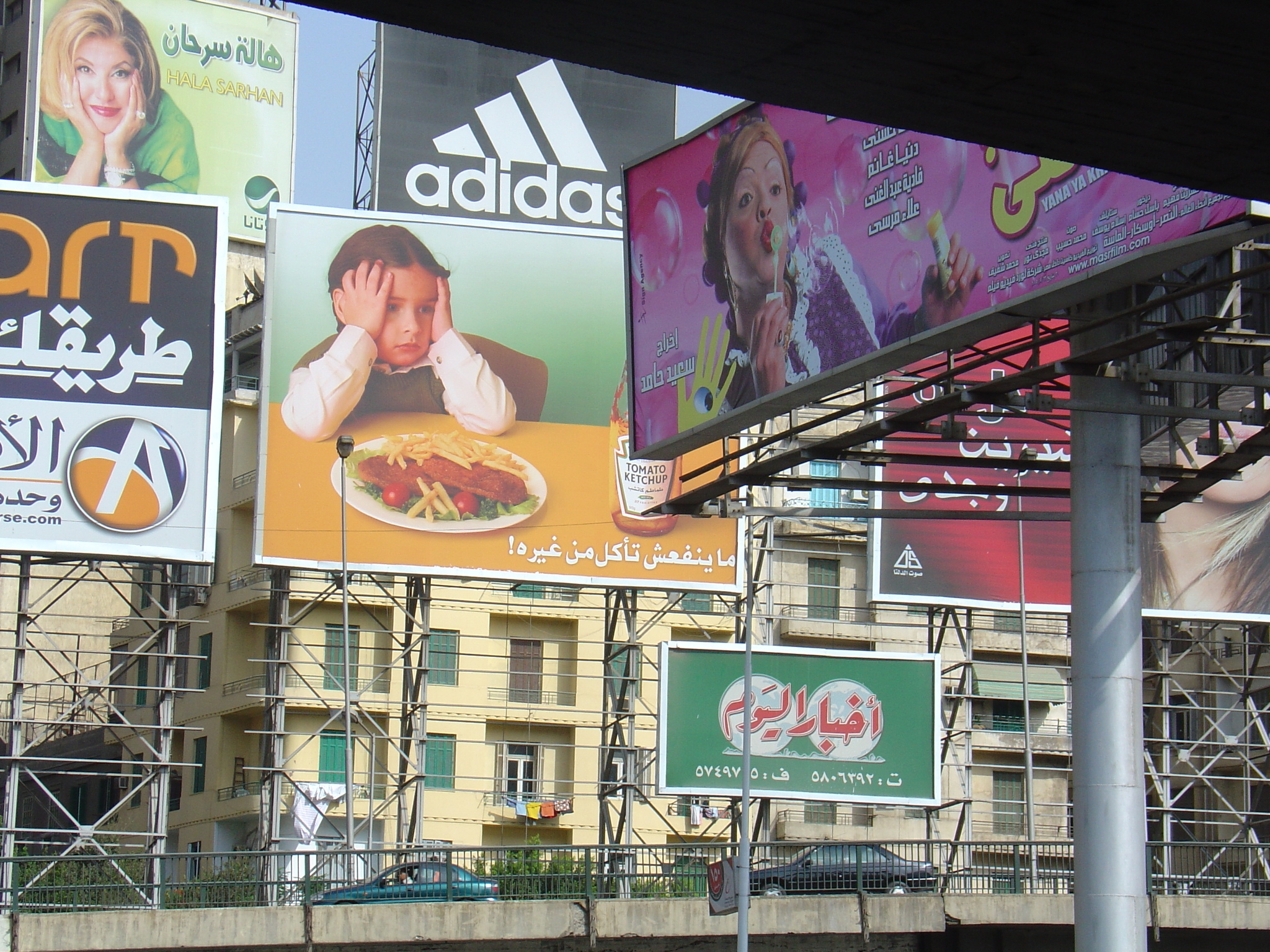
The newest issue of the Journal for Cultural Research focuses on Arab Popular Culture
The Journal for Cultural Research has just published a special issue on Arab popular culture which, needless to say, has several articles focusing on Egypt the hub of Arab popular culture.
I’m especially excited to see an article by my former graduate student, Dalia Said Mostafa.
The table of contents is as follows, with abstracts included for the articles about Egypt:
Dialogue
Valassopoulos, Anastasia, Tarik Sabry, Caroline Rooney, Mark Westmoreland, Adel Iskandar and Rasha Salti. 2012. Arab Cultural Studies – Thinking Aloud: Theorizing and Planning for the Future of a Discipline. The Journal of Arab Cultural Studies 16(2-3): 117-134.
Articles
Stein, Rebecca L. 2012. Impossible Witness: Israeli Visuality, Palestinian Testimony and the Gaza War. The Journal of Arab Cultural Studies 16(2-3): 135-153
Armbrust, Walter. 2012. A History of New Media in the Arab Middle East. The Journal of Arab Cultural Studies 16(2-3): 155-174.
A Psychological Anthropologist in Tahrir Square
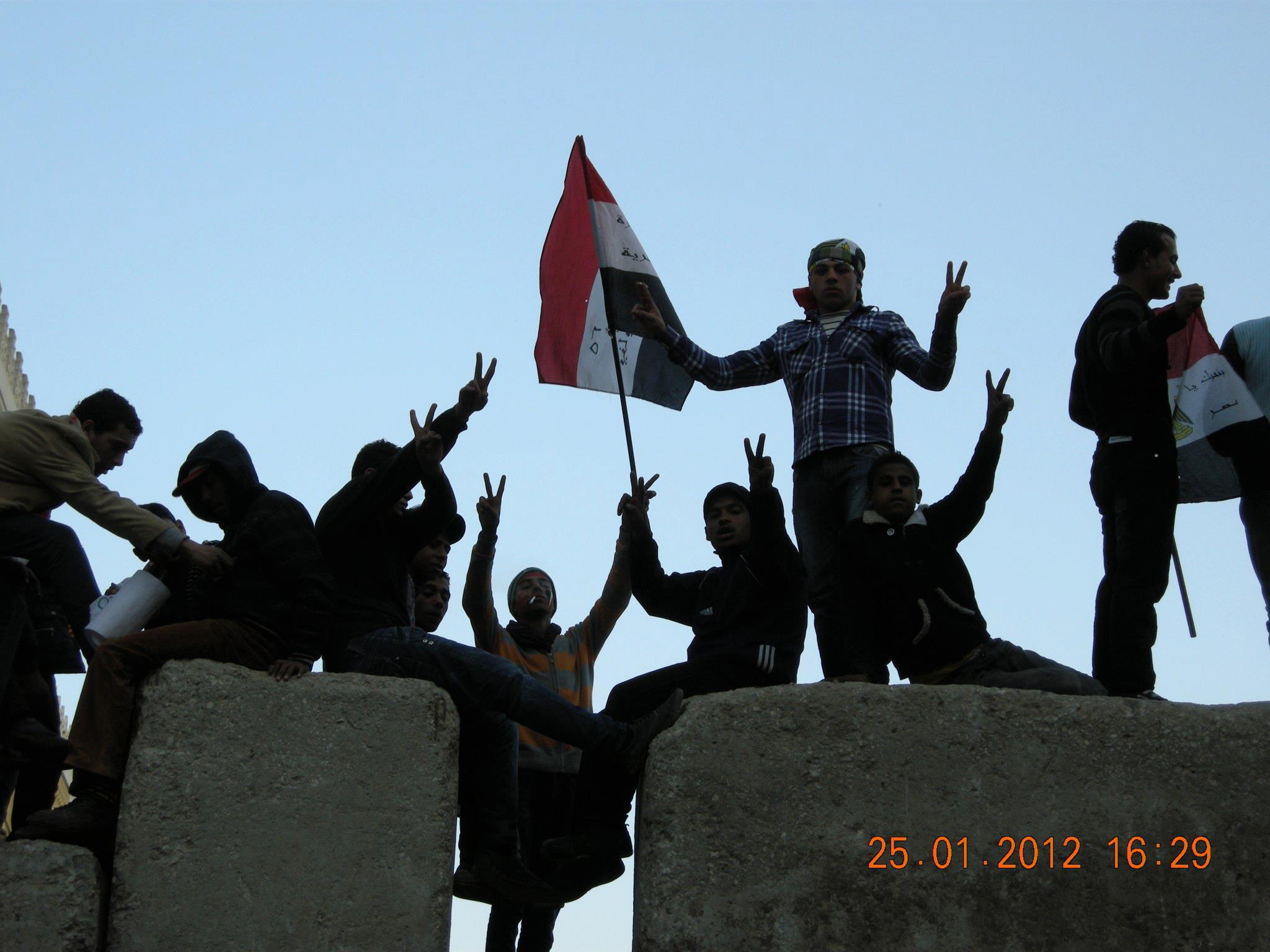
Celebration in Tahrir Square, 25 Jan. 2012, marking one year since the beginning of the uprisings. Photo by Malak Rouchdy. Used by permission.
“On the evening of 28 January, I decided that I must return to Egypt,” begins Mohammed Abouelleil Rashad in his account of his participation in the uprising in Tahrir Square in late January and early February.
The article is entitled “The Egyptian Revolution: A participant’s account from Tahrir Square, January and February 2011” and appeared in the April issue of Anthropology Today.
Psychological anthropologist Rashad was living in London when the uprising broke out. Like many other Egyptians who had been living outside their home countries, he leaped at the chance to return and be able to help push out the old autocratic regimes that had denied them political rights.
Rashad brings up several points that as contributing factors into why the uprising succeeded. The first was that a division of labor was very quickly set up in Tahrir Square, which he refers to as “a poignant erasure of the relations of political domination and subordination to which Egyptians have become so accustomed,” in that it symbolized ordinary civilians breaking away from the bureaucracy that had characterized Mubarak’s government.
Tahrir Square
Another prominent theme was the square itself. The symbolism of Tahrir Square cannot be overstated–it was a center of the 1919 Egyptian rebellion against English colonial rule, and the word Tahrir itself means “liberation.”
E-Humor in Egypt: The Man Behind Omar Suleiman Meme
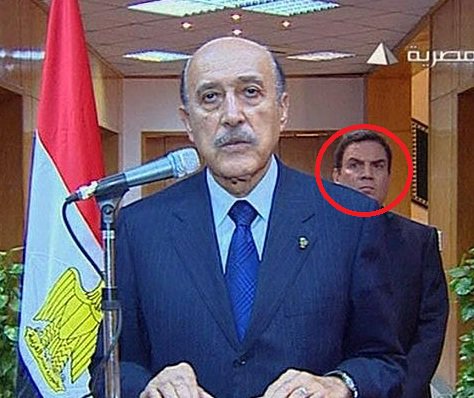
The man behind Omar Suleiman
One genre of joke that emerged in the wake of the Egyptian revolution was that of “the man behind Omar Suleiman.” It involved jokes, pictures, videos and even a song based around a mysterious figure who appeared on the crucial television broadcast in which Hosni Mubarak’s resignation was announced.
On the 18th day of protests, Omar Suleiman announced that he was going to make an emergency statement. As Egyptians everywhere anxiously huddled around their television sets to listen to the statement they had all been waiting for, many viewers’ couldn’t help but notice the stern, frowning man standing behind the vice president.
The initial jokes began by asking: who is that guy standing behind Omar Suleiman?
The answers were many. It was speculated that he was Omar Suleiman’s personal security officer, or a member of Suleiman’s political office, or an Egyptian army officer. Then the jokes began, the most widely circulated being somebody quipped “He’s the guy who owns the microphone, waiting to take it when Suleiman finishes” and the jokes started to flow.
Jokes spread not only by word of mouth but more frequently by Twitter, blogs and other social media. An Omar Suleiman hashtag was created.
Twitter, of course, lends itself to a number of satirical uses. Early on during the protests, hashtags were created for several targets of the revolution, including Hosni Mubarak and Habib Al-Adly, and these too contributed to the flow of humor:
Reforming Graduate Education in Egypt

Ranked third in the nation, Mansoura University was founded in 1972.
A guest post by Sofia Rasmussen
The seeds of revolution have long been sowed in Egypt. Long before the media coverage and the Facebook groups, some Egyptians were fighting to reform an education system that was antiquated and leaving the country unable to compete in a globalizing economy.
This revolution did not yell, this revolution stayed inside and this revolution could potentially change Egypt, pulling many Egyptians out of poverty, and hopefully taking the rest of the world with them.
Egypt’s higher education system has undergone fundamental change in the past several years, but the government has discovered that true change will take far more than setting up a couple of accredited PhD programs online or mandating a shorter summer for students. This overhaul will take decades to accomplish.
The Organization for Economic Cooperation and Development, or OECD, has published a report that details key areas of deficiency and proposes courses of action for addressing them. Among the chief problems identified are:
- Too many graduates in social sciences and humanities
- A shortage vocational and technical workers
- Market demanding more soft and practical skills
- Research needs to be connected to the market and national innovation
- Schools are crowded and underfunded
- Universities need to function independently of the state
Egyptians As “Light of Blood”
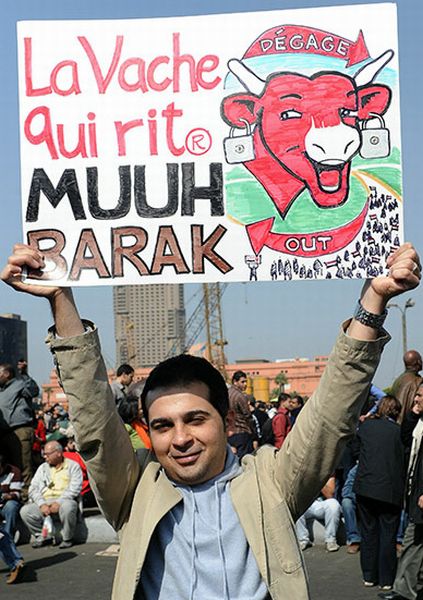
For centuries–maybe longer–Egyptians have been known as humorous. The tradition lives on.
Shortly after Saad Ibrahim was sent to jail by the Mubarak regime on a trumped up charge intended to send a chill through the pro-democracy and human rights NGOs in the country, a bunch of us sat around in the Café Riche coffee house telling Saad Ibrahim stories.
My favorite was about the time Saad was traveling in Saudi Arabia. When his bus was stopped at a check point, he discovered that he had left his Egyptian passport at the hotel. Questioned by the kingdom’s security forces, Saad asserted that he was Egyptian.
“Egyptian, eh?” sneered the officer in charge. “Tell us a joke.” So Saad did, and the guards laughed heartily and sent him on his way.
This story illustrates better than any assertion I could make the principle of the Egyptian character. In regional stereotypes, Egyptians are usually seen as the funniest of the Arabs. They are said to be khafiift id-damm (light of blood).
According to Isandr El-Amrani Egyptian advocates under Roman rule were banned from practicing law because their jokes threatened to undermine the seriousness of the courts (I’ve been searching for a confirmation of this to no avail; anyone know any classical sources for this claim?)
Ibn Khaldun, the great 14th-century Arab social theorist, noted that Egyptians were an unusually mirthful and irreverent people (Messiri :3).
Khafiift id-damm was once described to me by an Arabic instructor as, “Our lives are so hard, so filled with absurdity that if we don’t laugh, we would never stop weeping.”

"The Village of Gamal's Father" a roman-a-clef mocking the Mubarak regime, ran on-line from 2006-2009.
So as part of my research for the paper on news parody I gave at the International Studies Association, I’ve been reviewing Egyptian humor before and after the revolution.
One of the most interesting pre-revolutionary satires was a blog entitled Ezba Abu Gamal (“The Village of Gamal’s Father”), a series of brief accounts of life in a small village which ran from late 2006 through February 2009.
An ezba is a farming village consisting of the villa of the owner of most of the land, with a large private garden, surrounded by the agriculture workers’ houses. These types of villages emerged in the 19th century concurrent with the development of a new irrigation system comprised of water canals and trenches; the ezba was usually settled alongside these canals. A typical ezba consists of 20 to 30 families, 150 to 300 persons.
This ezba represents the Egyptian nation. There are posts about ladies rights, the new constitution (“clause two: Al Hag Abu Gamal is in charge of everything”), a referendum, computers (it takes the Hag a while to realize that “blog” is not a swear word), and more.
Islamic Realpolitik in Egypt

The call by the Muslim Brotherhood for a government of "national unity" may be an effort to allay foreign and domestic fears, but it also creates hope for many. The hands in this graphic are labeled (from top, proceeding clockwise): April 6th, Salafis, Muslim Brotherhood, Political Parties, Revolutionary Youth.
Free elections in Egypt won the Muslim Brotherhood 48% of the vote and gained 22% for the Salafis, but this has not been taken by either group as a mandate to recreate the country according to some version of shari’a law .
It’s still the economy not ideology that motivates Egyptian voters in this period of change.
(Digression: Groups labeled “secular” and “liberal” did less well than was expected, in part because these terms are not actually what defines the various parties so labeled. The so-called “secular” and “liberal” parties range from Marxists to folks who link to US libertarian sites on their web sites. What kind of coherent coalition can such folks form?)
Both the Salafists and the Brotherhood are aware that their elections owe more to a trust in their honesty (as pious Muslims), their organization, and their longstanding opposition to the Mubarak regime than to any desire for an Islamic state.
54% of Egyptians in a recent Gallup poll said it was jobs and the economy that are most important for the new government to deal with. Only 1% called for the implementation of Shari’a in the same poll.
And economic change requires that the new Egypt not make any abrupt break with its Western allies, especially the US. The Muslim Brotherhood’s call for a “national consensus government” – which means an alliance with some of the liberal parties — stems from the organization’s recognition that a partnership with secular parties would ease concerns in the US that could lead to a reduction in US aid.
Egyptian Mukhabarat Jokes
One way to manage fear is with humor. Hence Egypt's mukhabarat jokes.
So while I’m on the topic of jokes…
Egyptians didn’t only tell jokes about Mubarak, of course. They also told jokes about the Mukhabarat who kept him in power.
The Mukhabarat is short for Al-Mukhabarat Al-‘Ammah (General Intelligence Service), responsible for national security intelligence both within Egypt and without. It’s the “within Egypt” that gives the Mukhabarat their terrifying reputation in Egypt.
The Egyptian intelligence service was created in 1954 by President Gamal Abdel Nasser. For many years the name of the Mukhabarat director was a secret only known to high officials, but that changed when Major-General Omar Suleiman became the chief of the Mukhabarat in 1993. Suleiman was prominently featured in the media up to, and including, his announcing the resignation of Hosni Mubarak on television.
And now he’s running for president as a law-and-order candidate at a time when most Egyptians would like to see some law and order.
Here’s some pre-revolution Mukhabarat jokes from my fieldnotes and elsewhere:
A fox in the Western Desert escaped to Libya and the Libyans asked,’ Why do you come here?’ The fox said, “Because in Egypt they arrest camels.” The Libyans said, “But you are not a camel.” The fox then said, “Of course not, but try telling that to the Mukhabarat!”
Telling Mubarak Jokes
 WARNING: I’m going to start with a little essay on telling Mubarak jokes, drawing on linguistic anthropology. If this isn’t your thing, skip down a few paragraphs and you’ll go right to the list of jokes.
There have always been Mubarak jokes, long before the uprisings.
Mubarak was for decades mocked as “La Vache Qui Rit” (the Laughing Cow) after the French processed cheese that appeared in Egypt in the 1970s as part of the infitah, the opening up of Egypt’s markets to Western goods.
The phrase captured a number of popular stereotypes. It implied that he was a provincial, a peasant, referencing his rural background. It portrayed him as stupid and lacking seriousness. It tied him to the flood of foreign goods created by the economic changes over which he presided first as vice-president and then president. And it linked him particularly to a soft, gooey processed foreign cheese in contrast to the firmer white cheese of Egypt.
But darker jokes quickly emerged as Mubarak secured his control over the country through an ever more frightening security apparatus.
My favorite pre-revolution joke is this one:
Azrael, the angel of death, sent by God to finally collect Mubarak’s soul. After more than two months, Azrael returns, bloodied, bruised, and broken. “What happened?” asked God. “Egyptian state security seized me. They threw me in a dark cell, starved me, beat me and tortured me for weeks and weeks. They only just released me.” God turns pale and says, “You didn’t tell them I sent you?”

 CONNECTED in CAIRO