New Journal: More About ICTs in the Egyptian and Tunisian Uprisings Than You Can Get Your Head Around
 More than 30 communications scholars have contributed 16 papers to a special issue of the International Journal of Communication focused on the role of information and communication technologies in the Tunisian and Egyptian uprisings.
The journal’s editors, Manuel Castells and Larry Gross, write:
The world is witnessing the rise of millions of people in Arab countries against the autocratic regimes under which they had to struggle to live for so long. Tunisia and Egypt were the first nations to each force a president out of office, and Western media outlets were quick to attribute their overthrow to digital media, particularly to social media and Facebook. This special section, guest-edited by Johanne Kuebler and Ilhem Alagui, presents 16 articles that put this notion to the test and illuminate the discussion of the role of digital media in the ongoing changes in the Arab world.
These articles, submitted within a very short time frame, present initial thoughts by scholars on the current social transformations. They cover a broad array of issues, including studies of how the Internet drives political mobilization and affects journalism coverage, empirical data sets, and analyses of specific online practices. The relationships between online and offline political action are explored, and a number of relevant social examples of participatory and social media are examined, including the influence of video logs and the writing of collective memories through the online encyclopedia Wikipedia.
The introduction, by Kuebler and Allagui, argues that the complexity of the current transformations is overlooked when the overthrow of Tunisia’s Ben Ali and of Egypt’s Mubarak is attributed to digital media. Instead, a thorough analysis of the revolution’s organization by networks—and particularly social networks—is essential to our understanding.
While further research and careful examination is needed, these articles offer a first attempt by scholars in the field [of communications] to make sense of the recent uprisings.
The articles include:
Beyond the Arab Spring: Global Protests Against the Status Quo
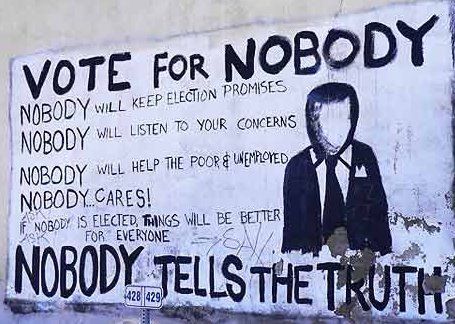
One of the hundreds of protest images on the TRAP Facebook community page
As I work on updates to the textbook International Studies: An Interdisciplinary Approach to Global Issues I found myself writing on the current global economic crisis, summarizing the interconnected effects recessions, bank failures and debt crises in different parts of the world have on one another. I can’t predict the ultimate outcomes, of course–that will have to wait for the next edition, presumably another four years down the road.
What I end my account of the crisis with are the waves of protests against the intersections of governments and large corporations that have been sweeping the world in the last two years, after most national recessions have technically ended.

Another image from TRAP
Besides the Arab Spring, we have had the Greek riots, beginning in 2008 over the death of a student at the hands of the police and continuing through this year as the government introduces ever greater austerity packages. In 2009 we had the G-20 Summit protests in London and the international May Day protests a month later.
Last year saw both riots and anti-austerity protests in London, anti-government protests in Thailand, and thousands of strikes and protests in China. So far this year we’ve seen not only the Arab Spring but protests against union busting in Wisconsin and Ohio, and now the “Occupy Wall Street” protests that have spread from New York to cities around the country.
As I blogged in response to a student question last year, most of these protests are not inspired by the Arab Spring in a causal sense–they have different proximal causes–but they are similarly rooted in economic downturns and a conviction that the existing political economic situation is unfair, unjust, and unsustainable. Like the Egyptians, they make cool new uses of social media.
And they draw inspiration from the astonishing successes of Tahrir Square.
Most of these protests aren’t about any one issue but lots of issues–rising prices, unemployment, environmental degradation, political hypocrisy and anger at giant corporations showing huge profits as middle class and working class families see their lifestyles decay.
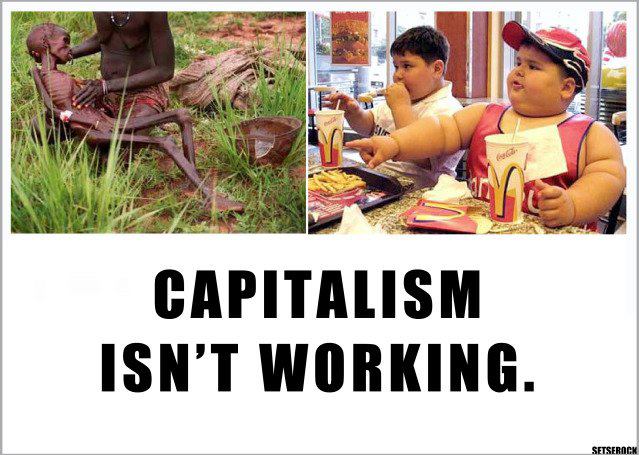
Another image from TRAP
In that vein, one of my colleagues in Egypt sent me the link to a fascinating Facebook page: TRAP-The Real Art of Protest, which literally celebrates protest against the status quo in general, especially the military-industrial complex(es), without supporting any particular ideology.
Out of Egypt: Coptic Christians Struggle with Uncertainties
 In June I traveled to New York to visit an old friend of mine from Egypt, Fr. Doug May, a Maryknoll priest who used to teach theology at the Catholic Coptic seminary.
“What is it with the Salafis?” he asked. “I lived in Egypt seventeen years, I traveled up and down the Nile visiting villages in the south and everywhere else, and I don’t think I ever heard of the Salafis. Now that’s all I hear about.”
I was astonished. I gave a quick mini-lecture on Salafis, but I couldn’t figure out how a guy who’d lived in Egypt three times as long as I had, spoke better Arabic and had seen more of the country, especially the southern governorates where Islamism is supposed to be strongest, would not have heard of Salafis.
And then I started thinking about it and realized that almost nobody I knew in Egypt ever mentioned Salafis in those days. I knew about them because I’m a social scientist and it was my job to read as much as I could on all aspects of Egyptian life, and the Middle East more generally. But Salafis just didn’t come up in conversations. There’s not one reference in my field notes from 1998-2002, and only one in my field notes from 2005.
They were not seen by most people as much of a political or social force.
The Mubarak regime routinely repressed the Salafis for decades, throwing their leaders in prison or sending them fleeing into exile, although some pundits now claim (with hindsight on their side) that he was encouraging them after the 2005 elections as a counter to the more moderate Muslim Brotherhood. More importantly, the revolution set free those imprisoned Salafi leaders, and other leaders returned from abroad.
As far as most sociologists can tell, the Salafis are not numerous, but they are loud, given to political theatrics up to and including attacks on Christians, and Sufi and Shi’ite Muslim shrines. And no one really know yet how influential they are. Polls say they influence maybe 15% of Egyptians but the real test won’t come until constitutional reform, and elections.
Now fear of Salafis is driving people out of Egypt, according to an article entitled “In Egypt, the Lure of Leaving” by Negar Azimi last month in the New York Times Magazine. Well, them, the bad economy and the uncertainty about the future.
In Egypt, Controversy Over a Field Marshall in Mufti
The Caliph Omar is said to have walked the streets incognito rewarding those who obeyed his new laws and punishing those who did not. The Abbasid monarch Harun Ar-Rashid, of 1001 Nights fame, is also said to have wandered the streets alone, without princely raiment, to to take the pulse of the people.
So one might argue that there was ample precedent for Field Marshall Tantawi to appear on Qasr an-Nil street Sep. 26 in civilian clothes, without an escort or entourage, shaking hands and speaking with the people. But the event turned controversial after it aired on state TV.
Keeping It Brief: The Impact of the Global Economic Crisis on the Middle East in Two Paragraphs
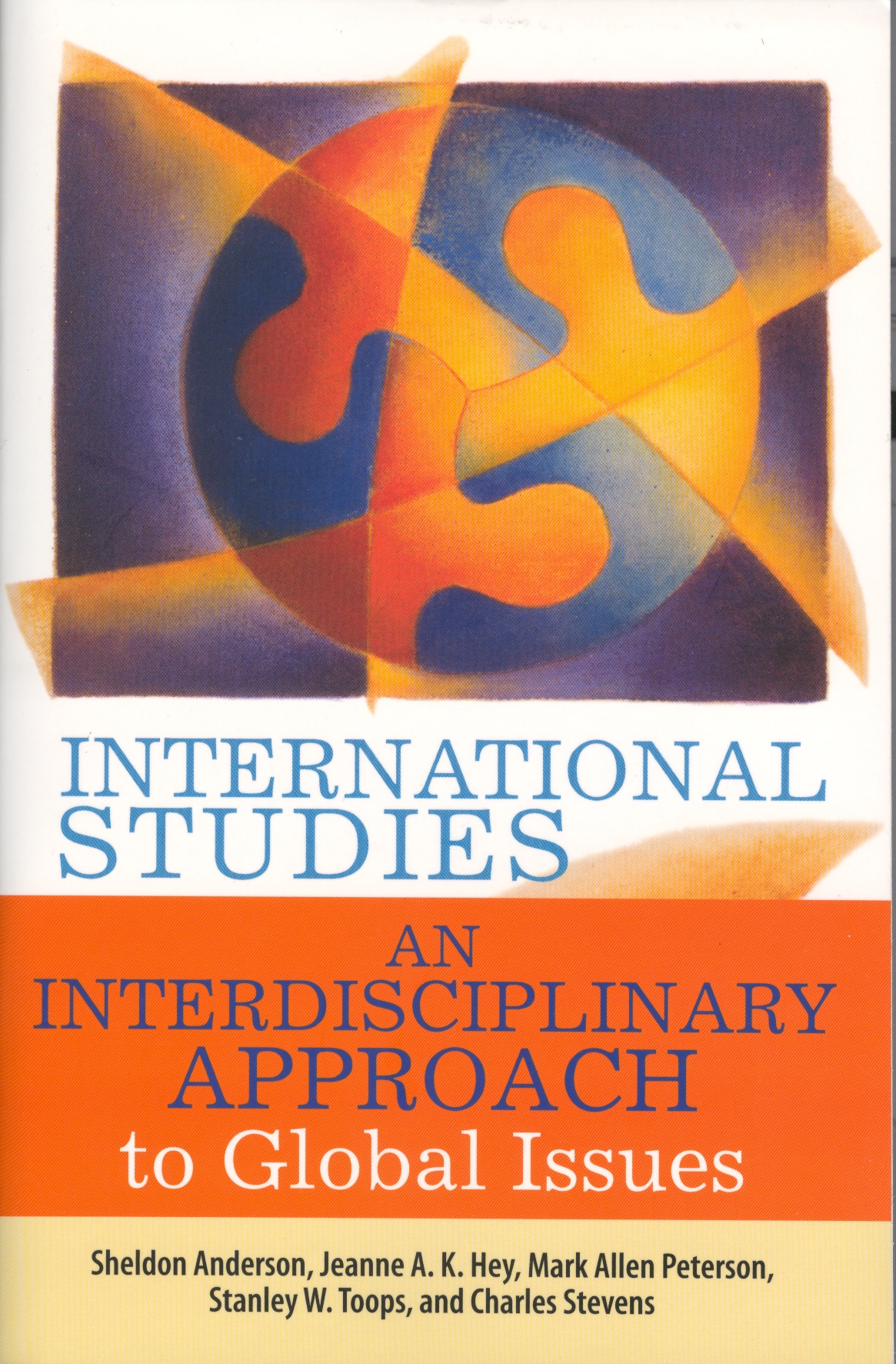
Cover of the first edition
Writing short is harder than writing long.
My colleagues and I are writing a much-needed update of our textbook International Studies: An Interdisciplinary Approach to Global Issues (Westview, 2007).
I drew the short straw, so in addition to updating my chapters on Intercultural Relations and the Middle East, I ended up revising the economics chapter.
The hardest part has been writing a short section on the current global economic crisis, since it is so complex and multilayered.
After reviewing World Bank and Brookings reports, here’s what I had to say about the Middle East:
Although oil-producing counties in the Middle East lost enormous sums in international investments, they were generally less severely affected by the crisis than many other parts of the world because of continuing high world oil prices. Iran, largely cut off from global financial markets due to U.S. sanctions, did not even sink into recession.
Countries with less petroleum fared worse. It is no coincidence that countries with fewer petroleum reserves (such as Egypt, Syria and Tunisia), and those in which the public enjoyed a smaller share of revenues from oil sales (like Libya and Yemen) were the countries in which the so-called “Arab Spring” emerged. Already facing high unemployment and rampant government corruption, protests in these Arab countries did not decline as they did in most other parts of the world but grew dramatically, toppling apparently strong governments like that of Ben Ali in Tunisia, Hosni Mubarak in Egypt, and turning into full-fledged armed revolutions in countries like Libya.
Obviously, I could write a whole chapter on the impact of the global financial crisis on the Middle East, but it’s a a brief wrap-up in a short summary in an introductory textbook, so that’s all I get!
Comments welcome!
Sex, Politics and Social Drama in the New Egypt

Amr Hamzawy

Basma Hassan
In the old regime, love affairs and sex scandals that could threaten to blight political careers or bring down high-ranking officials were almost non-existent, at least in the public sphere.
Although common enough in the US and Europe, controlled media, and a general public consensus that civility precluded talking publicly about such things, combined to keep sex scandals out of public discourse in Egypt.
In the current climate, with an increasingly open media and a large body of political actors struggling to build followings for elections whose times and forms are as ambiguous as their outcomes, the possibility of private affairs becoming public and political is quite real.
Such was the case of the recent public love affair of Basma and Amr Hamzawy. He’s one of the leading lights of liberal politics. She is an award-winning movie actress from a political family background. Their romance, once revealed in the spotlight of the media, became a public show, a “social drama” whose unfolding in a world of everyday gossip, news reports and social media, becomes a form of cultural expression.
Read more…
Islam and Democracy in Turkey and Egypt: Editorial by Osama Salama

Arab League Secretary General Nabil Alarabi, right, gives an Arab League gift to Turkish Prime Minister Recep Tayyip Erdogan during the opening session of Arab Foreign Ministers meeting in Cairo, Egypt, 13 September 2011. Photo by KHALED ELFIQI
On September 17, the independent Ruz al-Yussuf newspaper carried an op-ed by Chief Editor Osama Salama entitled “Why is Islam pushing Turkey forward and dragging Egypt backward.” I’m not a great fan of Ruz al-Yussuf, but this editorial deserves reprinting in its entirety. The translation is not mine but that of some anonymous editor at Mideast Newswire (you can see it in the original Arabic here). Clarifications in brackets are mine.
The headline of the article might be shocking. It would actually be more accurate to ask: Why are the Islamic parties in Turkey pushing their country forward, at a time when their counterparts in Egypt are dragging our country backward?
Certainly there is no Turkish Islam and another Egyptian Islam. Islam is one religion with the same principles, values and rules. The difference lies between the ideas, interests and tendencies of those belonging to Islam, and speaking in its name, knowing that none of them represents it.
The question imposed itself on me and forced me to tackle it after what happened last week between Turkish Prime Minister Recep Tayyip Erdogan and the Egyptian Islamic movements.
At the beginning of Erdogan’s visit to Cairo, there were celebrations and warm receptions. But by the end of it, the dispute emerged and the attack was launched against him. They received him as the caliph of the Muslims and bid him farewell as an apostate, although only a few hours separated the two positions.
End of the AUC Strikes
The American University in Cairo today (Sept. 20) released the following statement:
The American University in Cairo reached an agreement today with the Independent Syndicate representing AUC custodians, landscape workers, and security guards, and with the Student Union representing students. The agreement provides better salaries and employment conditions for workers, more transparency on processes and procedures affecting the AUC community, and more opportunities to engage students in the University’s annual budget process.
You can read the full address by AUC President Lisa Anderson here or watch the video below.
What is particularly unprecedented here is the shift toward transparency–AUC actually opening up its budgets to its clients, constituencies and other stakeholders. The other fundamental shift was the solidarity between students and staff, their mutual assistance and support, though their goals were really quite different.
I canvassed some of my former students and colleagues on their opinion of what was happening. Every alum and faculty member was full of praise for the events. Here are a few comments:
On-Line Library Research Guides for the Arab Uprisings
 A shout out to my friend and colleague Robin Dougherty, Arabic librarian at the University of Texas, who has put together with her colleague Michele Ostrow an on-line research guide for the Arab Spring.
This is specifically intended for students at UT Austin, so some of the databases may not be available to everyone, but it references many open-access websites and also includes links to her own bookmarks in Delicious.
Robin has also shared with me a similar guide put together by Christof Galli at Duke University
Changing Egypt One Civil Interaction at a Time

Exposed to public scrutiny via the news media, public officials may have to change the ways they interact with the citizens.
It is a fundamental principle of my discipline, anthropology, that the details of everyday life matter tremendously in understanding social change. So it was with great interest I read two recent news articles remind me forcefully that, rising media censorship or no, this is a new Egypt.
The first is a report in Al-Masry Al-Youm and in the Daily News of a bus driver named Emad Abdel Azim who was allegedly tortured and sodomized by police in Alexandria. That this was done under the direction of Captain Emad Abdel Zaher, who was previously the officer in charge of the two policemen currently on trial for the public beating to death of Khaled Said, adds an important political dimension to the stories.
During the Mubarak regime, such allegations would rarely see the light of day. In the new Egypt, they make front-page news and lead to an investigation of the officer by the public prosecutor.
Equally interesting is a charge widely reported, that a policeman was harassed and “verbally abused while on duty” by two sons of a prominent Muslim Brotherhood leader–in fact, Mohamed Morsy, the president of the Freedom and Justice Party–when he pulled them over and asked to see the driver’s license, which he refused to show.
Under the Mubarak regime, high-ranking commercial and political figures were among the few people immune to police abuse. The fact that First Lieutenant Mohamed Fouad filed a complaint at Sharqiya Security Directorate against the Morsy Brothers, and that this was widely reported is significant.
In the past, a man such as Morsy would be expected to use his extensive social networks (wasta) to get his sons off the charge. In this case, media scrutiny has led to the Freedom and Justice Party officially stating that Morsy will not interfere and that rule of law will apply.
The real power of a free media is not simply the breaking of investigative stories on government corruption but the capacity to expose the many little everyday incidents whose cumulative effect is to allow civil society to operate, Even if neither victim wins his case, the knowledge that media reports can, and will, appear and frame the characters of public officials in a country where elections can (as we all hope) change governments, should have a tremendous effect on the directions of social change in Egypt.

 CONNECTED in CAIRO