Anthropologists Writing About Copts In Postrevolutionary Egypt
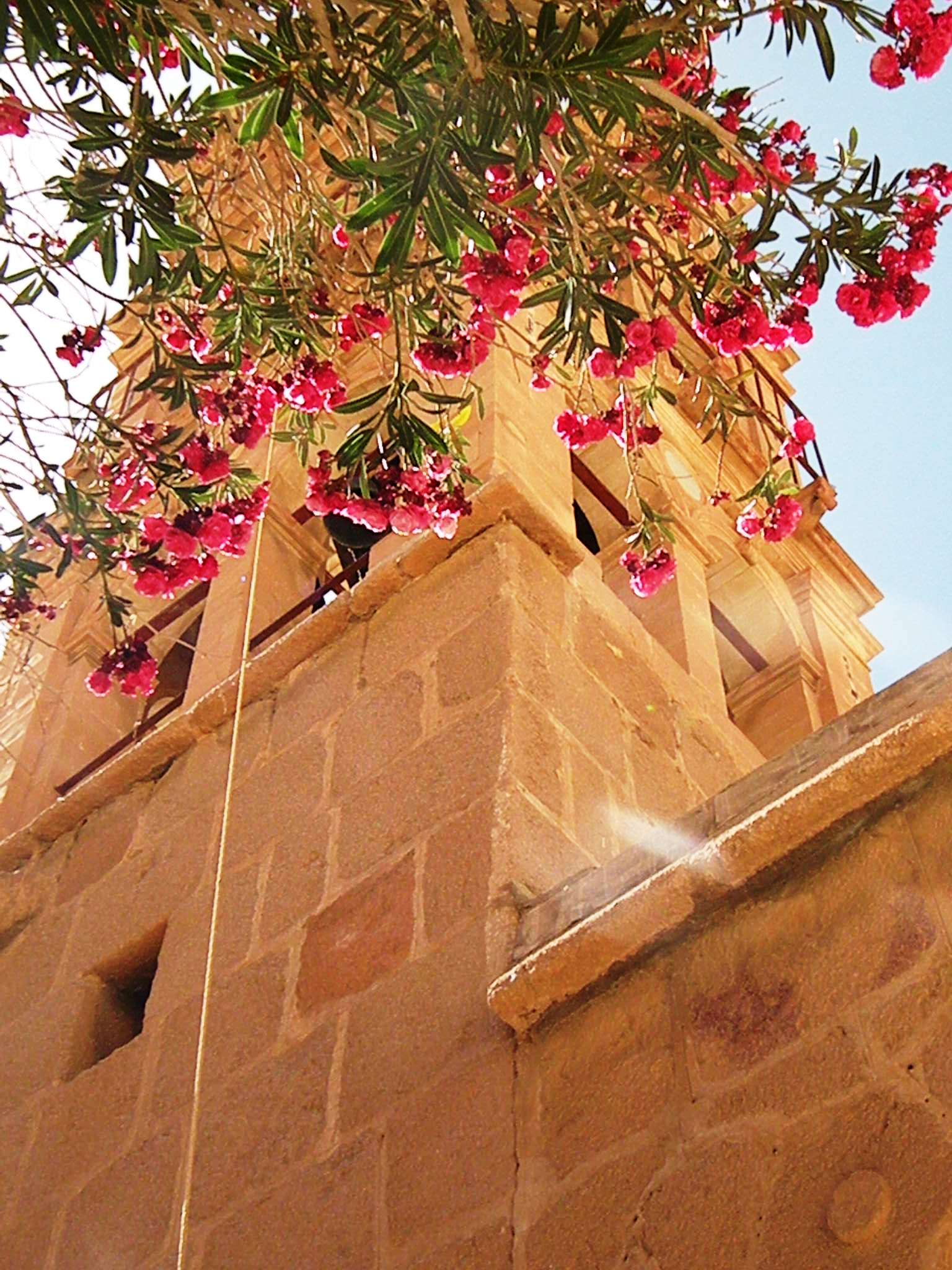
A tower at St. Catherine’s monastery at the foot of Mount Sinai, Egypt. This is possibly the oldest continuously inhabited Christian monastery in the world.
“Twice a year, at Christmas and Easter, Pope Shenouda comes out on state television and assures everybody that Christians and Muslims are all one cloth,” a Coptic student wrote in an essay in my social theory class at the American University in Cairo more than a decade ago.
The essay was on the concepts of latent and manifest in social theory. The notion that we are all one, all Egyptian, and that the only difference is one of faith, was the “manifest transcript,” the narrative that was allowed to be said in the public sphere. But there are hidden transcripts that can be said only within families or small circles of friends: “Yes, our Muslim neighbors are good people. But when it comes right down to it, you can’t completely trust them.” Across the street, Muslim parents are telling their children the same thing.
With the revolution, many of these traditions about what can and cannot be said are changing. Simultaneously, the differences between Copts and Muslims, and the place of Copts as minorities in the new Egypt, are matters of serious and significant debate.
So it is interesting to read what anthropologists have been writing about Egyptian Christianity over the past year. Here is a brief survey of eight recently published works on Coptic Christians in Egypt.
Where Do You Find “Civil Society” (In Egypt And Elsewhere)?
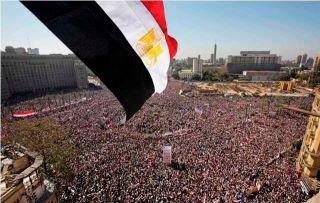
So is this civil society? Or something else? And if so, what?
The term “civil society” is used by social scientists to refer to those aspects of human social and political experience outside the realms of family, state, and market, in which people associate to advance common interests. Its use is often ambiguous, though; some people use it to refer to a “third sector” of society distinct from government and business, which would obviously include the family and other aspects of the private sphere. In yet other uses, it refers generally to institutions that allow democratic society outside the state, such as freedom of speech, independent judiciary, free and fair elections, the right to assemble to protest, and so forth.
This is actually less messy in practice that it might seem when you try to pin down definitions, because the civil society literature in (mostly) political science and sociology seeks to identify and describe (and often promote) those specific institutions, organizations and networks outside the state apparatus and the market, that seek to advocate for, and create, those more general democratic principles.
Irregardless, any discussion with the word “civil society” in it almost inevitable focuses on Non Governmental Actors.
In recent decades, most efforts to describe and promote political libralization–that is, the transformation of authoritarian societies into more democratic societies–have heavily focused on the notion of civil society.
 Whatever else happens in the wake of the Presidential elections and the military council’s decree, it seems clear that in post-revolutionary Egypt the Muslim Brotherhood will play a considerable role in Egyptian politics for the foreseeable future. The group is likely to wield a great deal of power and influence for a long time in post-revolution Egypt.
That’s why it is useful to review Nathan Brown’s Carnegie paper from earlier this year on the Muslim Brotherhood’s efforts to come to terms with its own success. This paper was written after the Ikhwan’s success in the parliamentary elections but before their candidate won the presidency–indeed, back when they still said they weren’t going to run a candidate for the presidency.
The main focus of this paper was the changing philosophy of Egypt’s Muslim Brotherhood as it prepares to transition from a semi-illegal opposition party to being one of the main political forces in Egypt. The picture that emerges of the group is of a pragmatic political organization that seeks to develop it’s own policies, especially in terms of the economy, but is willing to compromise on some of the issues it had previously taken critical stances on (most notably on cultural issues and foreign policy) in the interest of moving the country forward.
Brown cites the movement’s old slogan “participation, not domination,” several times throughout the piece as evidence that the Brotherhood wants to attempt to build a real multi-party democracy in Egypt. He also offers as evidence the fact that the the group had promised not to field a candidate for president, and even revoked the membership of one prominent follower because he had declared his candidacy. Does the fact that the Brotherhood reneged on this promise and, in fact, won the presidential elections change anything?
Laugh, O Revolution
And speaking of laughter and the revolution, here’s a song from the heady days (February 12, 2011 to be precise) when Mubarak resigned, hopes were high, and humor was ascendant:
“Laugh, O Revolution (Idhhaku ya thawra )” calls the singer. “Ha, ha, ha” responds the crowd.
Can Laughter Change Egypt?

Egyptians have always enjoyed a good joke
My recent op-ed for the Common Ground News Service is now out.
Entitle “Can Laughter Change Egypt” it argues that while telling political jokes is as old as Egypt itself,
during last year’s Egyptian revolution, satire directed at the powerful went public, offering Egyptians a way to resist power creatively and non-violently. Public laughter helped break the grip of fear the regime had relied on for so long, and continues to affect Egypt’s politics today.
Of course I mention Bassem Youssef’s El Bernameg, and El Koshary Today, and Ezba Abu Gamal. I also quote my former colleague Hebatallah Salem, who was at the Oxford conference on the revolution with me. She is compiling a history of the Egyptian revolution through its jokes.
It’s already been picked up by a couple of sites, including Al-Arabiya and The Daily Star (Lebanon).
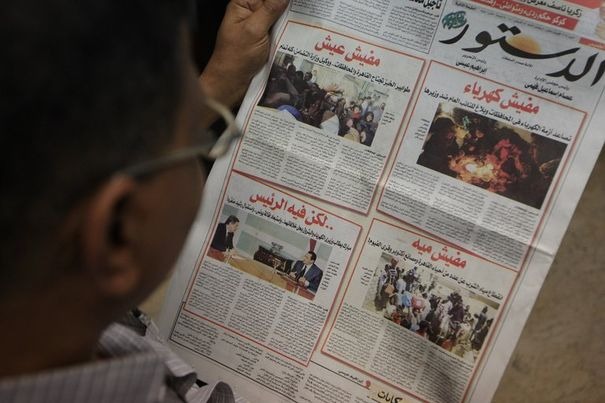
Ad-Dostour is one of a growing number of news media under the gun for “insulting the president.”
One of the ways the regime sought symbolic control was through making it a crime to insult the president or his family.
Even during the period in the early 2000s when many of those who guage censorship felt the regime was allowing the press greater freedom to report on the failings of ministries and government agencies, the president, his wife and his sons were held sacrosanct. Criticize them and you would almost certainly find yourself in court. It was a crime under a 1996 law that’s still on the books.
There’s been a revolution, new elections, and a new government but no one has gotten around to repealing those laws yet. So the Egyptian Supreme State Security Court may be making a decision on whether insulting the president is allowable in the new Egypt.
On the carpet are three chief editors of private newspapers:
- Abdul Halim Qandil, Chief Editor of Sawt al-Umma [Voice of the Nation]
- Adel Hammouda, Chief Editor of Al-Fagr [Dawn] newspaper
- Islam Afifi, Chief Editor of Ad-Dustor [The Constitution]
Afifi was already arraigned August 23rd in the Giza Criminal Court, making him the first journalist to be officially tried since Mubarak’s ouster, although conspiracy-theorist and talk-show host Tawfiq Akasha was also recently charged. President Morsi used his legislative authority (for the first time) to void the clause in the 1996 press bill that allows journalists to be jailed while awaiting trial (Afifi’s trial is scheduled for Sept. 18). Morsi did NOT change the clause making it a crime to insult the president.
What Hath President Morsi Wrought?
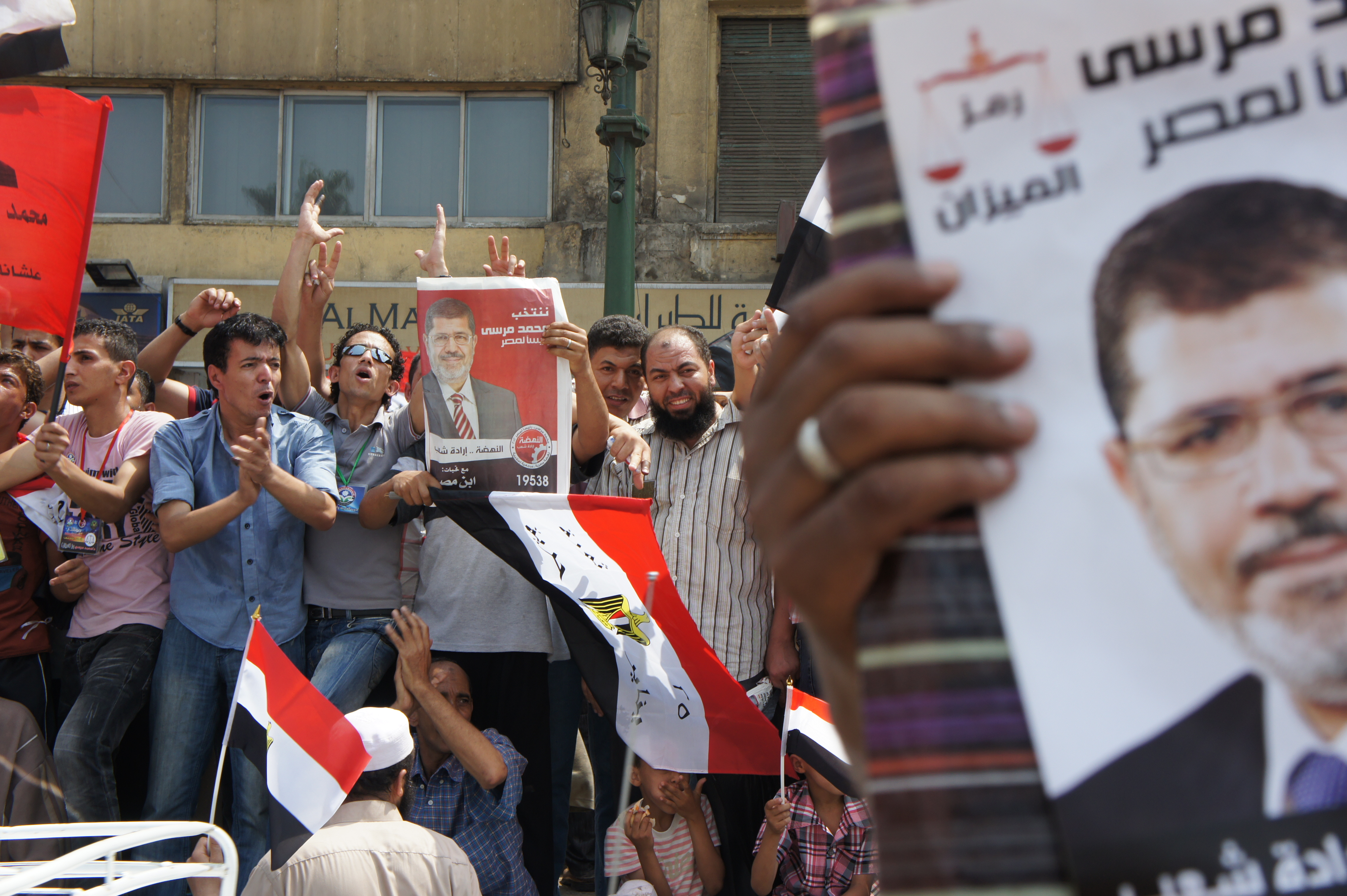
Mohamed Morsi supporters celebrate his initial victory in the Egyptian presidential elections in Tahrir square. Photo by Zeinab Mohammed. Used under Creative Commons license.
The Egyptian revolution continues to hit us with surprises. No one predicted this recent action of Mohammed Morsi’s–using his presidential power to undue the SCAF’s assumption of legislative authority (passing it to the president), and to retire Field Marshal Tantawy and Lt. Gen. Sami Enan, the two highest ranking members of the military council.
Mariam El-Ghobashy has a great summary piece entitled “Egyptian Politics Upended,” putting the whole thing in the context of a wider clash between elites who keep running afoul of popular political fervor. She begins:
When he took office on June 30, President Muhammad Mursi of Egypt looked to have been handed a poisoned chalice. The ruling generals of the Supreme Council of the Armed Forces had tolerated a clean presidential election but then had hollowed out the presidency, saddling Mursi with an executive’s accountability but little of the corresponding authority. The country resigned itself to the grim reality of dual government, with an elected civilian underdog toiling in the shadow of mighty military overlords. Then, just over a month later, Mursi turned the tables, dismissing Egypt’s top generals and taking back the powers they had usurped. The power play crystallizes the new dynamic of Egyptian politics: the onset of open contestation for the Egyptian state.
Locating the Boundaries of Free Speech in Egypt

Tawfiq Akasha, whose show was canceled by Egyptian authorities. Of course it’s censorship–the question is, is it legitimate censorship? As the courts determine the answer to that question, they will continue to frame the boundaries of what will constitute free speech in the new Egypt.
It is a principle of linguistic anthropology that all communication depends on silences. Choosing what not to say is as important as what and how one articulates things, and will differ with context.
Censorship occurs when the boundaries of what is legally accepted as sayable and what is not are contested. What the boundaries of speech and other forms of expressive culture should be is being rethought in Egypt, and it is playing out in the courts.
The most recent example: the television channel Al-Fara’een, owned by talk show host Tawfiq Akasha, was shut down August 9th by Egyptian state authorities, after the Freedom and Justice Party filed a lawsuit accusing Tawfiq of having encouraged people to attack President Mohamed Morsi.
Akasha has been a pro-military advocate fond of spinning conspiracy theories, such as a recent one claiming that Morsi did not actually win the election, but stole it with the backing of the Muslim Brotherhood and the United States.
In addition to the lawsuit, on August 8th hundreds of demonstrators protested outside Egypt’s Media Production City, located in 6 October City, against what they described as media corruption. The protesters demanded the closure of the not only of Fara’een channel but also a talk show show run by Lamis al-Hadadi that had been critical of the Muslim Brotherhood, President Morsi, and the revolution generally.
Egypt’s Economic Crisis: Thirty Years of Fiscal Mismanagement
 In 2004 Samer Soliman completed a PhD dissertation which was subsequently published in Arabic as “Al-Nizam al-Qawy wal Dawlah al-Da`ifah: Al-Azma al-Maliyyah wal-Taghyir al-Siyasih fi Misr fi `Ahd Mubarak” (“Strong Regime, Weak State: The Fiscal Crisis and Economic Change Under Mubarak”). The text focused on links between long-term economic failure in Egypt and the increasingly oppressive restructuring of the Mubarak regime.
In the wake of the revolution, Stanford University Press has brought out a revised, updated English version of this book, entiteld The Autumn of Dictatorship, Fiscal Crisis and Political Change in Egypt under Mubarak
The most important contribution is that Soliman reframes the question from “Why did the regime fall?” to “why was the regime as durable as it was (given its many failures)?”
The book description reads:
Over the last thirty years, the Egyptian state has increasingly given its citizens less money and fewer social benefits while simultaneously demanding more taxes and resources. This has lead to a weakened state—deteriorating public services, low levels of law enforcement, poor opportunities for employment and economic development—while simultaneously inflated the security machine that sustains the authoritarian regime. Studying the regime from the point of view of its deeds rather than its discourse, this book tackles the relationship between fiscal crisis and political change in Egypt.
Ultimately, the Egyptian case is not one of the success of a regime, but the failure of a state. The regime lasted for 30 years because it was able to sustain and reproduce itself, but left an increasingly weakened state, unable to facilitate capitalist development in the country. The resulting financial crisis profoundly changed the socio-economic landscape of the country, and now is paving the way for political change and the emergence of new social forces.
The basic argument is as follows:
Reviews of Oxford Conference
 An article on the conference “The Egyptian Revolution: One Year On” held at Oxford University last May has just appeared in the latest issue of The Chronicles, a publication of the American University of Cairo’s Economic and Business History Research Center
The article is by Randa Kaldas, the Associate Director of the Center who, like me, was a participant in the conference. It is entitled “Spotlights on The Egyptian Revolution, One Year On: Causes, Characteristics and Fortunes, University of Oxford” You can download it here: Spotlight On Conference or on the image to the left.
Another review of the conference by Reem Abou El-Fadl appeared in Jadaliyya last month.


