A Critical Perspective on the Art of the Revolution
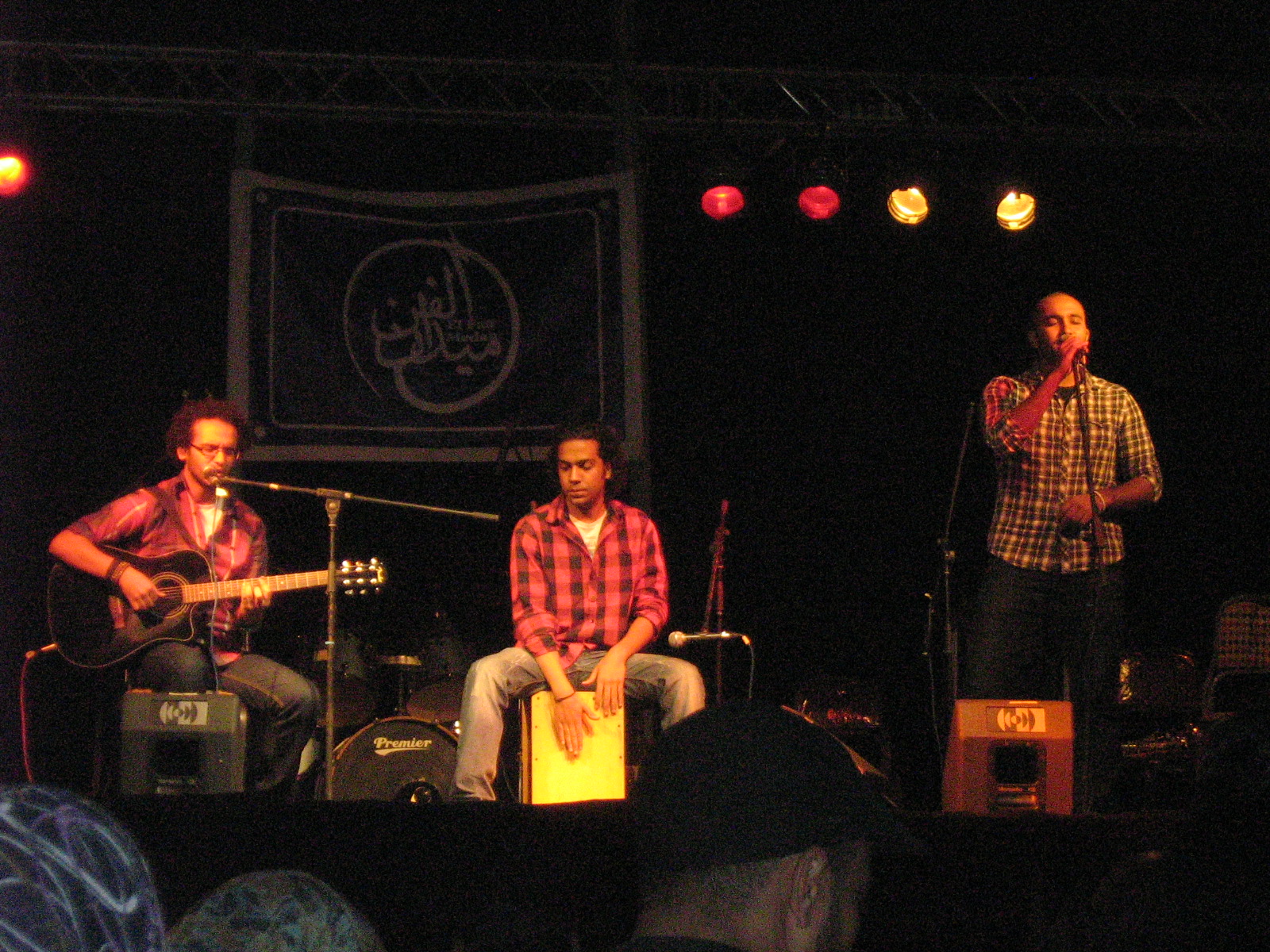
Iskanderella performing at al-Fann Midan Nov 5.
Ursula Lindsay offers a critical, and thoughtful look at “Art in Egypt’s Revolutionary Square” in the latest issue of Middle East Research and Information Project (MERIP).
Interest in the art of the revolution has been considerable ever since the graffiti and performance art of the uprising during the 18 days. There’s a lot of interest currently in the forthcoming film The Noise of Cairo. But much of this description of art is uniformly enthusiastic.
Not so Lindsay. She begins:
Although the legal framework in Egypt has not changed (Emergency Law and laws against defaming religion, the army and the state remain in place), what Egyptians call the January 25 revolution has undoubtedly ushered in a new sense of freedom, as well as a determination to use public space to congregate and to connect, and to demonstrate support for the uprising through cultural activism.
New Documentary on Egyptian Art After the Uprisings
I’m hearing a lot of buzz about a forthcoming documentary film The Noise of Cairo. It’s about changes in the Cairo art scene after the 2011 Egyptian revolution.
Produced by scenesfrom, which calls it a “cinematic kaleidoscope,” it features interviews with a dozen artists from Ramy Essam to Sondos Shabayek to Ali Abdel Mohsen, and many others I’ve not heard of), asking them to explore the role played by creatives during the revolution.
Unfortunately, there’s not much more information available. I’ll update this page as I learn more.
New Book Is a Suspenseful Narrative Account of the Uprising
 The first major book about the uprising, Ashraf Khalil’s Liberation Square is out in time for the anniversary of the beginning of the uprisings.
It’s not the very first book on the transformations occurring in Egypt, but most of the others fall into one of two categories. They are books on contemporary Egypt that were updated and rushed into print, like Alaa Al-Aswany’s On the State of Egypt, Steven A. Cook’s The Struggle for Egypt or Lloyd Gardner’s The Road to Tahrir Square. All good books, mind you, but really about what led up to the uprisings rather than the uprisings themselves.
The other kind of books already out are scrapbooks, collections of photos, graffiti or texts with some explanation and commentary. I’m thinking of Messages from Tahrir: Signs from Egypt’s Revolution by Karima Khalil, The Road to Tahrir: Front Line Images by Six Young Egyptian Photographers, Mia Gröndahl’s Tahrir Square: The Heart of the Egyptian Revolution, and Tweets from Tahrir: Egypt’s Revolution as it Unfolded by Alex Nunns and Nadia Idle. Useful, and often very interesting, but not a coherent narrative account of the uprisings themselves.
Khalil’s book is described by Kirkus Reviewsas a “journalistic memoir.” The review goes on to call it a “personal account that will be appreciated by those looking to move beyond the day’s headlines, from one who wrote some of the stories published under those headlines.”
Laure Miller calls it “thrilling” in her review in Salon, writing:
The last half of “Liberation Square” forms a suspenseful, day-by-day narrative of the weeks between that first protest, on Jan. 25, and Mubarak’s resignation on Feb. 11. Khalil was on the streets much of the time and has interviewed dozens of participants about the unfolding drama as the demonstrators sought to take bridges and public spaces from the police, figured out how to communicate when the government cut Internet and cellphone service, fended off attacks from hired Mubarak supporters on camel- and horseback, welcomed the military and then wondered why it didn’t do more to defend them, listened to and rejected the self-justifying statements of Mubarak and other officials, and gradually realized that there was no going back and that the country was theirs at last.
The Arabist calls it “riveting” and offers a brief fascinating passage from it, urging everyone to go buy it right away. My former colleague at the American University in Cairo, psychologist Nancy Peterson agrees, saying she couldn’t put it down to get her work done.
I’ve ordered my copy.
Don’t Mess With the People
This new video calls on the people of Egypt to turn out in force once more on Jan. 25th to show the Supreme Council of the Armed Forces that Egyptians do not want a military regime but an elected civilian government.
On Jan. 25th, the anniversary of the beginning of the uprisings, we can anticipate at least two things. First, tens of thousands, perhaps hundreds of thousands, will obey the call of this video.
The military regime will attempt to use the anniversary as part of its efforts to appropriate the “true revolution,” defining what counts as legitimate and what counts as destabilizing.
What remains to be seen is whether the anniversary is marred by bloodshed as these two purposes come into conflict.
Color Photos of 1920s-era Egypt
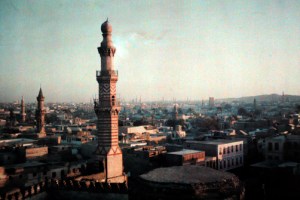
A Cairo skyline taken in the 1920s.
It used to be that if you wanted to see color photography of Colonial-era Egypt, your easiest route was the 1939 version of The Four Feathers. The Egyptian scenes were filmed on location in Egypt, although they were set some 50 years earlier.
Now, a web site called “Retronaut” offers 50 color photographs (autochromes) of Egypt in the 1920s taken for National Geographic by Gervais Courtellemont and W. Robert Moore.
Thanks to Rebecca Doherty for this reference.
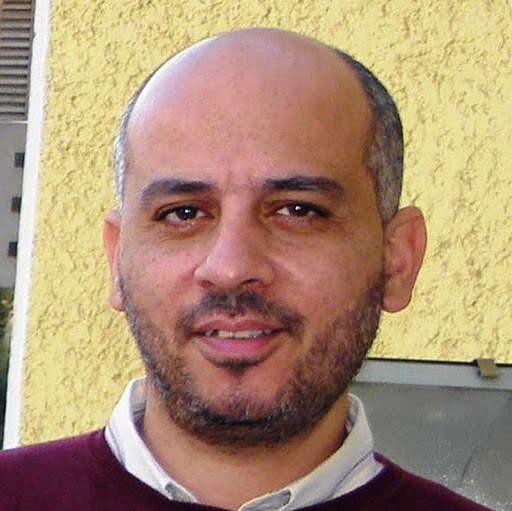
Atef Said
The web-site of the “socialist, feminist, anti-racist organization” Solidarity has posted an interview with Egyptian human rights activist and lawyer Atef Said, currently completing a PhD at the University of Michigan.
x
Said lays out his view of the progress of the revolution, in which SCAF (which he describes in fairly monolithic terms) is clearly the greatest obstacle:
v
Since February 11, SCAF has proven to be working against the revolution. An Egyptian critic described the current situation as a half coup d’état and half revolution. It is half coup d’état in the sense that the military is showing that it wants to control the future of Egypt, and to limit this beautiful and powerful revolution into a superficial change, one controlled by a military regime. And it is half a revolution, in the sense that no significant social and economic changes have occurred for the benefit of the majority of Egyptian people.
He dismisses concerns over the Muslim Brotherhood’s electoral gains and, while less happy about the Salafist showing, emphasizes:
x
My view is that whoever is elected is better than the army, which has proven to be the leading force of the counterrevolution, working with the support of Saudi Arabia and the United States. Their purpose was to crush — not simply slow — the reform process. So I say that any elected body is better than SCAF staying in power.
You can read the full interview here.
Academic Access to Connected in Cairo Through Project Muse
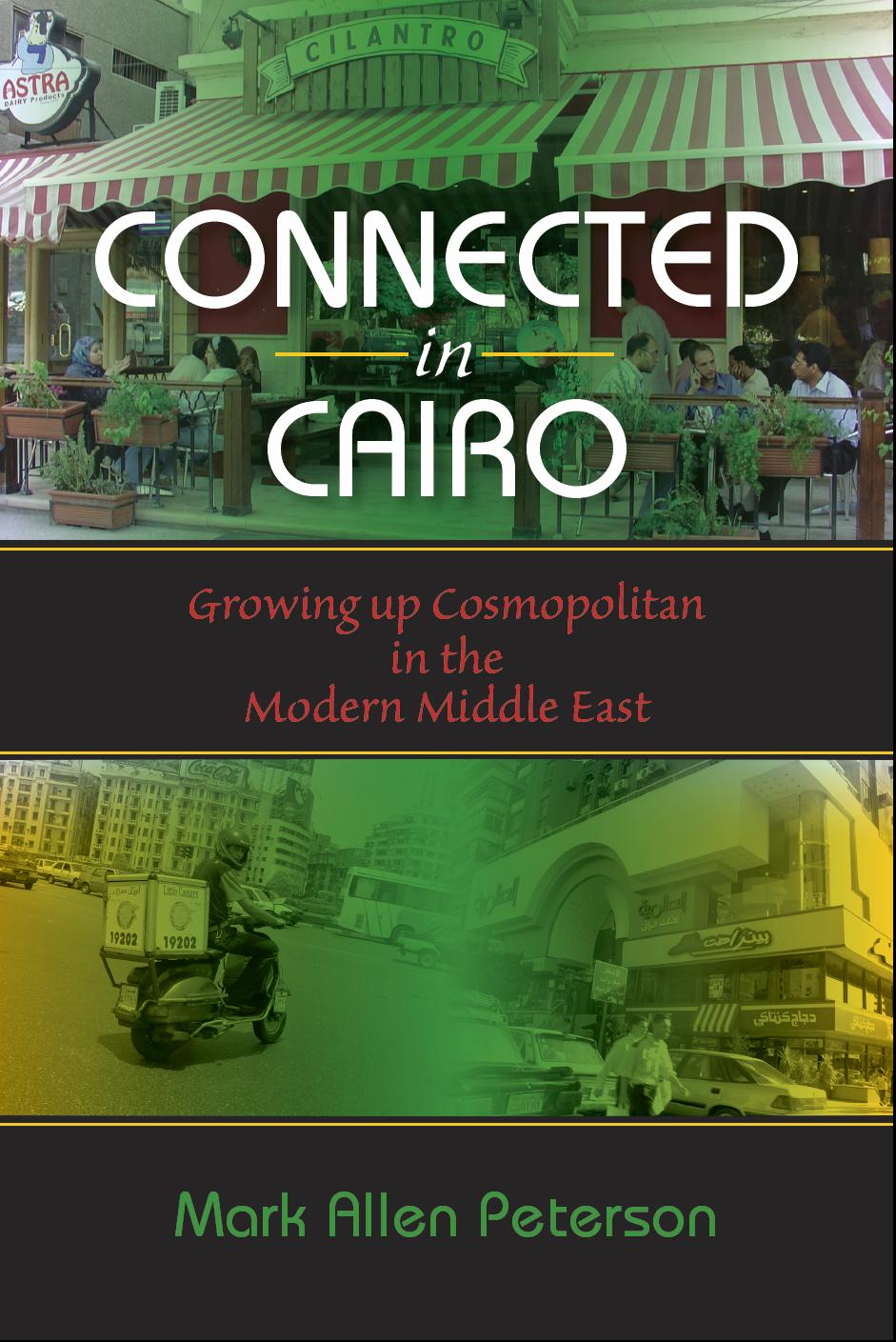 If your university library has an institutional subscription to Project Muse, you may be able to access Connected in Cairo directly, either on-line in text-searchable format, or as a set of downloadable pdfs.
Project MUSE is a leading provider of digital humanities and social sciences content; since 1995, its electronic journal collections have supported a wide array of research needs at academic, public, special, and school libraries worldwide. MUSE books and journals, from leading university presses and scholarly societies, are fully integrated for search and discovery.
In Egypt, the Military is Not a Monolith
 I’ve been teaching and telling people that Egypt’s military is not a monolith, and that it is probably in considerable internal confusion. This view just got a boost because Britain’s The Guardian has published an extraordinary account of the inside of the military as seen through the eyes of an anonymous middle-ranked officer.
Entitled “Egyptian army officer’s diary of military life in a revolution” it recounts how the regime moved to ensure the loyalty of officers when the uprisings started, but also claims that cracks are occurring in that loyalty, that there is considerable confusion–about what’s going on, about who is right, about where the country is headed–and growing dissatisfaction with Tantawy’s handling of things.
Two powerful passages:
After Mubarak fell and the rule of Scaf (Supreme Council of the Armed Forces) began, the top brass moved quickly to secure the loyalty of all mid-level and junior officers. Whenever a big Friday street demonstration or rally in Tahrir Square took place we would all receive a bonus of between 250 and 500 Egyptian pounds (£26-52), whether or not we had anything to do with policing the protests.
But later:
But as the months went on, despite this ignorance and the generous bonus system, dissent against [Egypt’s commander-in-chief and current head of Scaf, Field Marshal Mohamed Hussein] Tantawi has grown. Most of the mid-level officers now think of him as Mubarak’s right-hand man, and they hate the fact that Scaf’s violence has tarnished the army’s image in the eyes of the public. Many still disapprove of the current protests because they feel it’s not the right time, and also because they’re resentful that others can go and demonstrate on the streets when they themselves do not have such freedom. But that attitude is beginning to change, especially as independent TV channels have been airing video clips of the recent violence and the brutality of the security forces is being openly discussed by people like [prominent media personalities] Yosri Fouda and Ibrahim Eissa. More and more mid-level officers are turning against Scaf, and against Tantawi.”
Best Posts of 2011
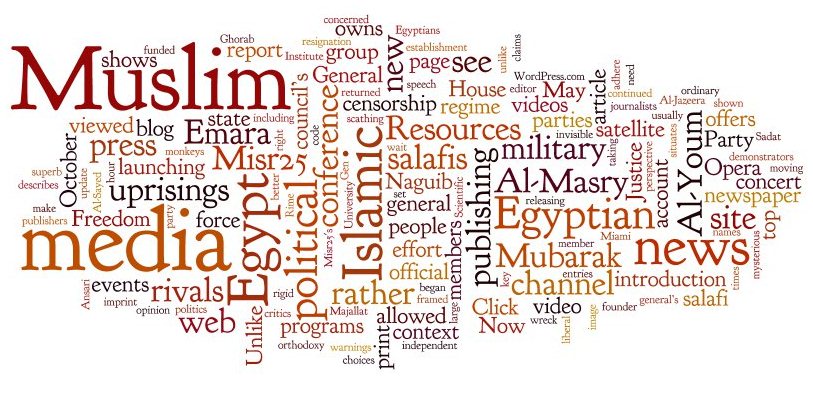
This is a “word cloud” generated from the text of this blog on Jan. 1st. It was created by wordle.net. The cloud give greater prominence to words that appear more frequently in the blog, making visual art out of text.
The beginning of a new calendar year is a time of reflection and house cleaning, and I’ve been doing both with regard to this blog. I already posted the statistics on the blog; this post is on its more qualitative successes. It is a list of the best posts from each month of the past calendar year. This post is labeled “best” rather than “top” posts because while I was guided by the number of views posts got, I wanted to emphasize which ones I thought were significant.
January
I created the blog site with a set of web pages answering two questions I found myself addressing in classes and public talks over and over again as the events in Egypt unfolded: Why Revolution? and Why Now?
February
My first real effort to bring an anthropological perspective to the uprisings resulted in an essay entitled Antistructure in Tahrir Square, which employs Victor Turner’s notions of communitas and antistructure.
March
The question of whether this was a “social media revolution,” (and if so, what that even means) can only be answered by empirical cases. My very popular entry on Egypt’s Piggipedia: Transparency as Resistance was an effort in this direction.
April
The absence of police oppression brought the salafis out into the public sphere in unprecedented ways. My very frequently viewed post Just How Significant are the Salafis in Egypt? reflected my own surprise, as well as my efforts to find a point of observation between the alarmism of most Western accounts and the derision of many early Egyptian intellectual reactions to those Western news reports. It was the first of many posts on salafists. Several of these are among my most frequently viewed posts.
May
In May I posted a link to my short article Egypt’s Media Ecology in a Time of Revolution, which has just come out in the latest issue of the on-line journal Arab Media and Society, published by the Al-Adham Center for Journalism Teaching and Research at the American University in Cairo.
June
My most popular post in June was Coca-Cola for the New Egypt, which reflects on how Pepsi and Coke seek to keep their marketing relevant by integrating their products into the “spirit” of the revolution in new ads. It followed a post that commented on the disastrous effort by Vodafone’s ad agency to tie one of its earlier ads to the revolution.
July
My most significant and frequently viewed post in July didn’t even express my own ideas–it summarized the Five Characteristics of Youth Movements described in a report in Arabic by Dina Shehata.
August
I first wrote about Basem Youssef’s wildly popular YouTube videos in May; this follow-post describing how Basem Youssef Leaps From Social Media to Television became my third most viewed post ever, with more than 440 views by Jan.1, 2012.
September
The single most widely viewed post of the year was Sex, Politics and Social Drama in the New Egypt. It’s a longish essay using Victor Turner’s concept of social drama to analyze the scandal of Amr Hamzawy’s public romance with the actress Besma.
October
In October I gave a talk at the University of Kentucky entitled Egyptian Youth in Urban and Virtual Spaces. I didn’t actually post the talk and accompanying slides until November, but it was still an October event as far as I’m concerned.
November
A couple of weeks before the elections I published A Partial Guide to Egyptian Political Parties, the result of efforts by my International Studies student Sarah Sterner, and an accompanying post Who’s Who in the Egyptian Political Parties (A Partial List) by another student, Mikaela Ashley. Both saw a flurry of activity in the days leading up to the elections, and I got thank you comments and e-mails from students, colleagues and journalists.
December
In December I added three significant additions to the Resources page: An alphabetical listing of Who’s Who in contemporary Egypt, an alphabetical listing of What’s What, and a Timeline of the year’s events. These were primarily the work of three of my International Studies students, Mikaela Ashley, Sarah Sterner and Sarah Fields, respectively, although I edited them and am adding entries as we go.
Check It Out: Timeline 2011


There’s a new section in the Resources page of this web site.
“Timeline: 2011” offers a timeline of events taking place in Egypt leading up to, and including to the Egyptian uprisings of 2011, and recounting the ongoing changes in Egypt since.
With more than 300 entries, it chronicles day-by-day the key events in Egypt throughout this tumultuous year, with links to videos, interviews, and news stories giving more information, or context.
It was initially compiled by Sarah Fields, an International Studies major at Miami University, as part of her independent study with me on the Egyptian uprisings this semester.
Click on the “Resources” button at the top right of the home page, or just click one of the months below to start browsing:

 CONNECTED in CAIRO