Understanding the October Violence in Egypt

Another cartoon by Carlos Latuff, used by permission, with gratitude.
What is the current conflict in Egypt about? International media make of it a sectarian conflict, but for most Egyptians, it is not about Coptic-Muslim tension–although that plays its part. Rather, this conflict is about the role that SCAF is playing in Egyptian society and whether or not the military council is going to really allow Egypt t transition to an elected civilian government.
Instead of exploring in detail what happened over the past several days, I’ll share several links to detailed, thoughtful accounts of the clashes between the army and the Coptic protesters and their secular and Muslim fellow travelers.
1. A firsthand account: Marching from Shubra to deaths at Maspero.
This is a firsthand account of the Oct. 9 march from the Shubra neighborhood to the Maspero Building off Tahrir Square, and the gradual increase in violence. It is a straight, personal narrative, not structured by the strictures of news reporting:
And then it happened: an APC mounted the island in the middle of the road, like a maddened animal on a rampage. I saw a group of people disappear, sucked underneath it. It drove over them. I wasn’t able to see what happened to them because it then started coming in my direction.
Carr is a well-known Egyptian journalist of British extraction, who writes primarily for the Daily News but increasingly also for the English on-line edition of Al-Masry Al-Youm.
In Egypt, Media Professionals Turn to Social Media in Protest
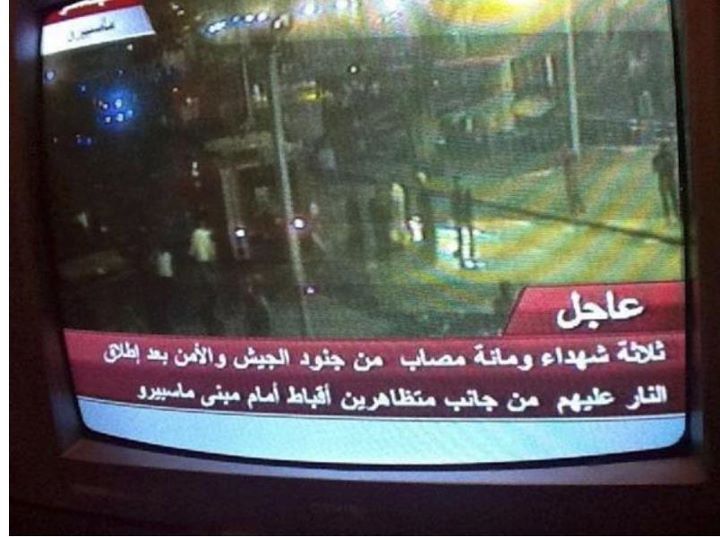
State television's coverage of the Coptic-Military clashes have been condemned even by state TV journalists
One of the more interesting uses of social media is by media professionals to add to, or distance themselves from, their professional output.
During the recent clashes between the military and Copts, several Egyptian state media figures used social media to offer critical commentary on the actions of their own media outlets.
State television’s record was pretty poor. A line of text at the bottom of the screen read “Three martyrs and dozens of injured victims in the army because of the attacks of the Coptic protestors” ran all night Oct. 9 (once events had calmed, the official toll was 23 Copts dead, two army personnel).
One television reporter called on people to take to the streets in order to protect the army forces. She told viewers that soldiers were being shot by protesters, and that there were many casualties among the soldiers.
By midnight, many of the employees of state television had learned that the alternative version of the what was happening in the streets: 21 Copts were killed under the wheels of the army tanks and through the bullets of snipers.
Some television staff claimed to have seen these incidents with their own eyes. However, they published their testimonies using social media rather than using the official television media where they work.
Middle East Edition of Connected In Cairo Now Available
 Connected in Cairo is featured in the October newsletter from the American University in Cairo Press, sandwiched between Matthew Jacobs’ book on the development of American foreign policy in the Middle East and Salima Ikram’s new introduction to Ancient Egypt.
The newsletter says the book is now available at the AUC bookstore in Tahrir Square. You can also order it on-line (if you live in the Middle East) here.
You can read the entire newsletter here.
The newsletter describes the book thus:
This book is an anthropological account of Egypt‘s cosmopolitan elite, the ―A and B+ classes—made up of old-money families, nouveaux riches, and many subdivisions that in their everyday life consume “transnational popular culture” emerging from spreading globalization, as they drive in Mercedes Benz cars, eat at McDonald‘s, and shop at Mango, or play Pokémon, and stay connected through their Blackberry or Apple computer.
“Part of my job was to demonstrate that in spite of their iconicity and indexicality with their counterparts abroad, McDonald‘s, computers, and other transnational goods and technologies do not replace local culture with global but become part of local culture by becoming situated in an infrastructural and social matrix that transformed them,” comments Peterson, an anthropology professor who taught at the American University in Cairo, in his epilogue.
Forthcoming Lecture at University of Kentucky
 I’ve been honored by being asked to give the first of three addresses in this year’s annual anthropology colloquium at the University of Kentucky.
My talk is entitled “Egyptian Youth in Urban and Virtual Spaces” and will be held Oct. 21 at 4 pm in the Student Center.
The colloquium theme is “Youth and Urban Spaces in the Middle East.” I’m the warm-up act; after me Sholeh Sharokhi (Butler University) will speak in January and Jessica Winegar (Northwestern Univ) will come in April.
Here’s a University of Kentucky news announcement about the talk: Visiting Professor Gives Youthful View of Egyptian Uprisings.
And here’s an article in the Kentucky Kernel: Series focuses on Egyptian Youth, mass media
And here’s an announcement in the Indiana University Press newsletter.
Violence Against Coptic Protesters is Evidence of Government Failure
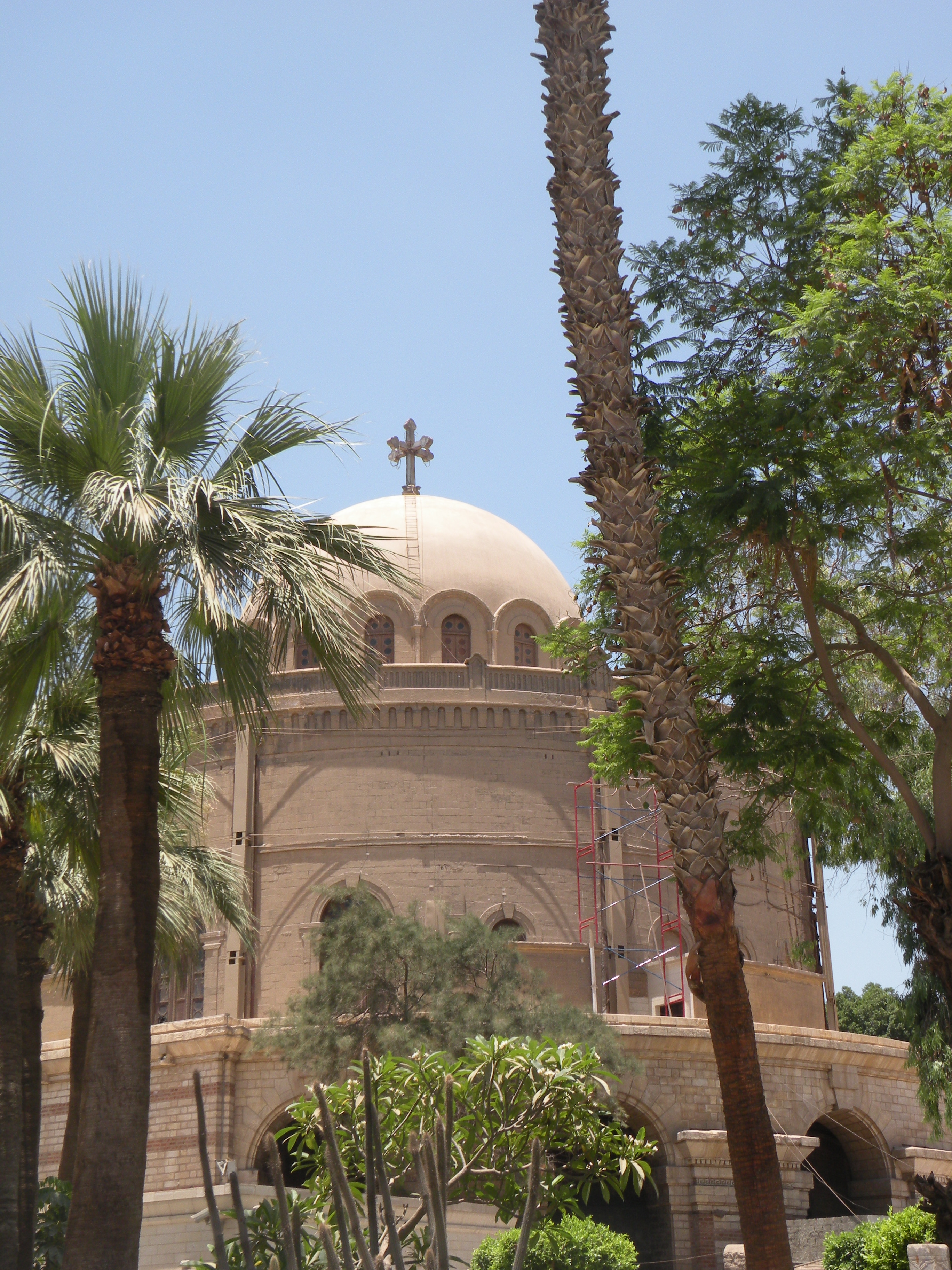
Egypt's interim government needs to look for alternatives to violence when dealing with Coptic protests.
Violence, wrote Isaac Asimov, is the last refuge of the incompetent. In ambiguous situations–like the political uncertainties of a country trying to make a transition to civilian rule with an interim military government all apointed by the ousted regime–the quicker the move to violence as a solution to a problem, the more incompetent an actor is revealed to be.
What yesterday’s violence in Cairo shows, more than anything else, is how little creativity the military council and its appointed government show in the face of crisis and change, in the face of creative social change. 25 dead, almost 300 injured, and dozens detained and bound for secret military trials attest to the damage resulting from an inability to think outside the schemas and frameworks of the old regime
The demolition (or partial demolition; news reports are unclear) of a Christian church in a southern governorate (Aswan, in this case) is nothing new. What is new in post-Mubarak Egypt is that the Copts, and their secularist and Muslim friends, didn’t let it lie. They got out there in the street and protested.
The government reacted in the way the Mubarak regime did, under cover of the hated Emergency Law, by sending in armed police with armored police vehicles, arresting protesters and holding them “for investigation.” Police defended their actions by claiming that the protesters started the violence. All according to the script.
Beyond the Public Sphere in the Modern Middle East
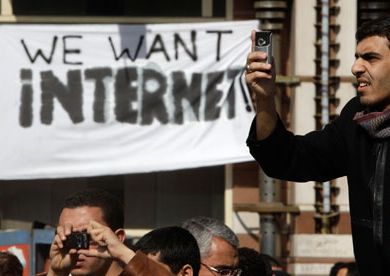
When will we stop looking for technology to drive political revolutions? asks Albrecht Hofheinz of Oslo University.
Accounts of mediated relations between the state and society have long been dominated by the concept of “the public sphere,” introduced into social theory in 1962 by Jurgen Habermas. Unfortunately, complains Albrecht Hofheinz of the University of Oslo, it’s a theoretical paradigm that lacks explanatory power where the Egyptian and Tunisian uprisings are concerned.
The “Public Sphere,” for those unfamiliar with it, refers to those parts of society where “private individuals come together into a public,” as Habermas says. Habermas considers the realm of everyday life, labor, commodities, market exchange, and so forth as making up “the private sphere.” It is contrasted with the “sphere of authority” comprised of the state, the ruling class, and its apparachiks, such as the police, state security personnel, and so forth. The public sphere mediates between these two domains, generating public opinion and so putting the state in touch with the needs and desires of the people.
Habermas original conceptualization was that the development of a public sphere was a necessary part of the evolution of democratic government. Whereas authoritarian governments merely speak to the people (including through pageant and pomp), “legitimate” governments listen to the people governed via a vibrant public sphere in which people can engage in debate.
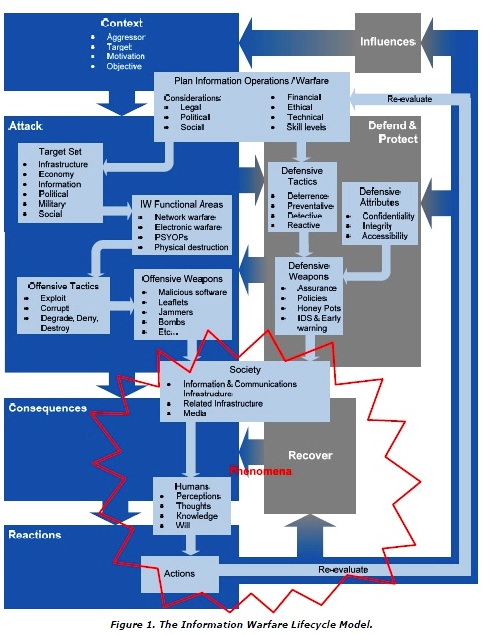 Information warfare.
That’s how the University of KwaZulu-Natal’s Brett van Niekerk, Kiru Pillay, and Manoj Maharaj characterize the Egyptian uprisings. Or, to quote them directly, “the uprisings were a form of social information warfare.”
In “Analyzing the Role of ICTs in the Tunisian and Egyptian Unrest from an Information Warfare Perspective” these South African scholars basically analyze the role of ICTs in the Tunisian and Egyptian uprisings from an Information Warfare Perspective.
I had great expectations that this approach would open up some new ways of thinking about the uprisings, but I was ultimately disappointed.
information warfare is a concept whereby information and its supporting systems have value and therefore can be considered as an asset to be attacked or defended; in fact, the information and information systems themselves may also be used to conduct the attack.
Freedom Plaza in Washington, DC Will Be “Our Tahrir Square”

Are there links between the current protests in the U.S. and Europe and the the Tahrir Square uprisings? There sure are.
There are many similarities between current protests in the U.S. in New York, Boston, Chicago, Los Angeles and a dozen other cities, and the Tahrir Square uprisings.
But are there links? Are they connected by anything beyond surface similarities?
Last March, in response to a student question about connections between the Wisconsin protests and those in Tahrir, I wrote:
Activists in Tunisia, Egypt and Wisconsin may well find themselves acting in solidarity with one another. … but the Cairo protests cannot be said to have led to or inspired the Wisconsin protests in the way the Tunisian protests can be said to have inspired the Cairo protests. … And yet, there is a distinct connection and it concerns ways the current global economic downturn has exposed the rising gulf between rich and poor, and the demand for an economics that serves the public good.
Noting that wealth disparities between rich and poor are actually greater in the U.S. than in Egypt under the Mubarak regime (according to U.S. federal agencies), I wrote:
I don’t suppose that the average protesters can articulate these trends or describe such statistics. But like the protesters in Cairo, they are aware that something is unfair, that they are being punished for economic declines caused by the very people who have profited by those downturns. … One of the chief differences between the neoliberalism that structures global economic interactions in the contemporary world and classical liberal economics is the notion of a public good, or commons. While classical liberalism assumed a common good protected by the state, neoliberalism assumes that markets can handle public goods better than governments. This erosion of public goods is noticed by the public, though they may experience it differently.
I would expect such protests to continue.
Of course, such protests did. A couple of days ago I wrote a summary of them, and wrote:
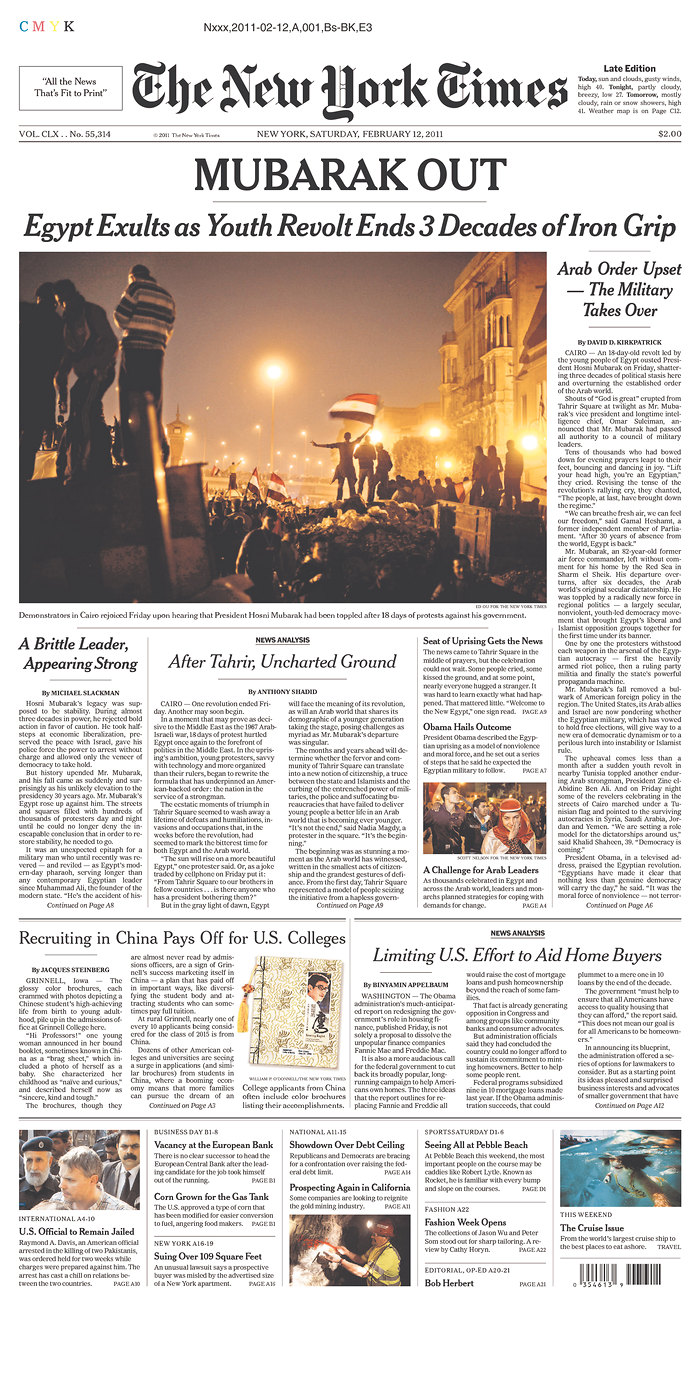
As protests explode world wide, the NYT still reports them the way the mainstream press did in the 1960s. But people have more choices now, two communications scholars argue.
How has the way news is framed affected the ways people outside Egypt understand the uprisings?
In “Overthrowing the Protest Paradigm? How The New York Times, Global Voices and Twitter Covered the Egyptian Revolution” authors Summer Harlow and Thomas Johnson of the University of Texas-Austin offer not only a content analysis of the New York Times coverage of the Egyptian uprising, but compare it to content analysis of columnist Nicholas Kristof’s Twitter feed, and the citizen media site Global Voices, finding that the different authors and genres framed their news quite differently.
They found that the Times reporting fell into the standard “protest paradigm” structure identified by communications scholars in the 1980s and 1990s, which delegitimizes protesters by focusing on “tactics, spectacles, and dramatic actions” rather than explaining the underlying reasons for the protests.
By contrast, they found Kristof used Twitter to provide “commentary/analysis” (but was hampered by the 140 character limit) and that the citizen journalism of Global Media offered “not just an alternative space for protesters’ voices and perspectives, but also a participatory, interactive approach to news coverage that could prompt greater credibility among readers.”
On Egyptian Music Since the Uprising

The uprisings ushered in a revolution in music as well as politics
Even NPR is getting into Egypt’s new street music. On Oct. 4 Banning Eyre started a new series on Afropop with a look at Egyptian street music.
Although it just scratched the surface, I thought it was a pretty good introduction. I particularly enjoyed his opening lines:
Get into a taxi or turn on a radio in Cairo, and you’re apt to hear one of three things: The first is melodious recitation of the Quran, a ubiquitous sound in this pious city of 22 million; or you might hear a voice from the golden age of Egyptian music (the mid-20th century), like the iconic diva Umm Kulthum; or third, you could hear a crooning pop singer like Amr Diab, with a slick mix of Arabic vocal angst and dated Western production values.
This really does capture the three main genres that have traditionally filled the urban Egyptian soundscape (though each example could be multiplied, of course).
The gist of the piece is that 30 years under Hosni Mubarak’s regime stifled creativity and innovation, but since the uprisings , things have changed. He writes:

 CONNECTED in CAIRO