Salafis Move Into Mainstream Politics in Egypt
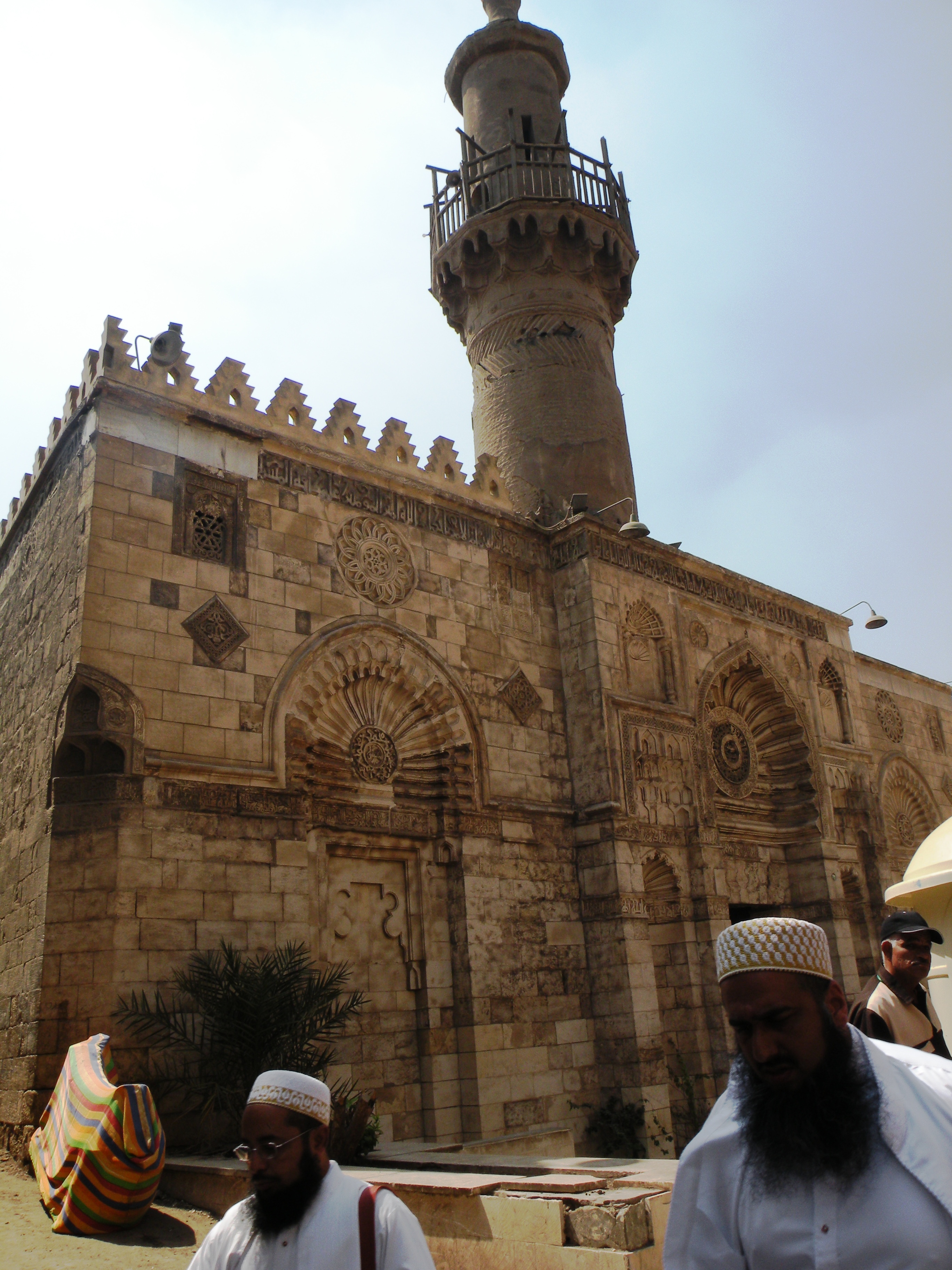 After decades of staying out of politics, Egypt’s Salafis have begun forming their own political parties in hopes of influencing the shape of Egypt’s new political order. No less than four parties have been announced, perhaps with more to come.
Salafis are Muslims influenced by teachings from Saudi Arabian clerics that seek to return to the purity of Islam as practiced by the prophet and his companions–as they interpret it. Salafi preachers have propagated their message in Egypt through mosque schools, conferences, youth activities and social services. The movement has traditionally remained aloof from political participation, and many preachers have for decades denounced involvement in politics from their pulpits.
This made sense during the days of the Mubarak regime, but refusal to engage in party politics in the post-regime era could make Salafis increasingly irrelevant. Yet participating in mainstream politics runs counter to decades of Salafist preaching, and may change the nature of the Salafist movement in Egypt.
In order to work out just how Salafis should participate politically in the forthcoming elections and constitutional reforms, several prominent Salafi figures including Mohamed Hassan, Mohamed Hussein Yaqoub and Gamal al-Marakby in May formed the Scholars Shura Council, headed by Abdallah Shaker. It issues rulings governing how Salafists can and should take part in the political process.
That the Salafists, who were heavily suppressed by the Mubarak regime, benefited substantially from the uprisings but did not take part in them, has been a sore point for many who took part in the protests.
As one of my friends said to me, “They refrained from politics for religious principles while we were risking our lives to overthrow the regime, but now that Mubarak is gone they are forming political parties.”
But Nader Bakkar, a spokesperson for the Salafi Nour Party, said at a Sep. 15 rally in Alexandria that it was good that Salafis did not take part in the 25 January revolution, because “the Americans would have ordered Mubarak to massacre us all.” The jest is a reference to a widely accepted belief that Mubarak suppressed the Salafis in part to pander to US fears of Muslim fundamentalism (although the official reason was Islamist involvement in the assassination of his predecessor, Anwar Sadat).
Strikes at the American University in Cairo
As with everything happening in Egypt these days, one of the most interesting things about the strikes and protests at the American University in Cairo (AUC) is how accessible is data about them. In addition to the press and television news stories, there are Twitter feeds, videos, Facebook pages, Flickr photos, and more .
About two thousand students and workers at the American University in Cairo (AUC) began an open-ended strike Sept. 11. The students are protesting the recent nine percent hike in tuition fees and the workers are protesting continuing low salaries, and lack of contracts. Each group is striking in solidarity with the others.
The protest started in early Sunday morning–Sunday is the beginning of the school week in Egypt, Friday and Saturday being the weekend–with students refusing to pay the usual ten pounds ($1.65) to park their cars inside the university’s campus.
Erdogan’s Visit to Egypt Good Political Theater
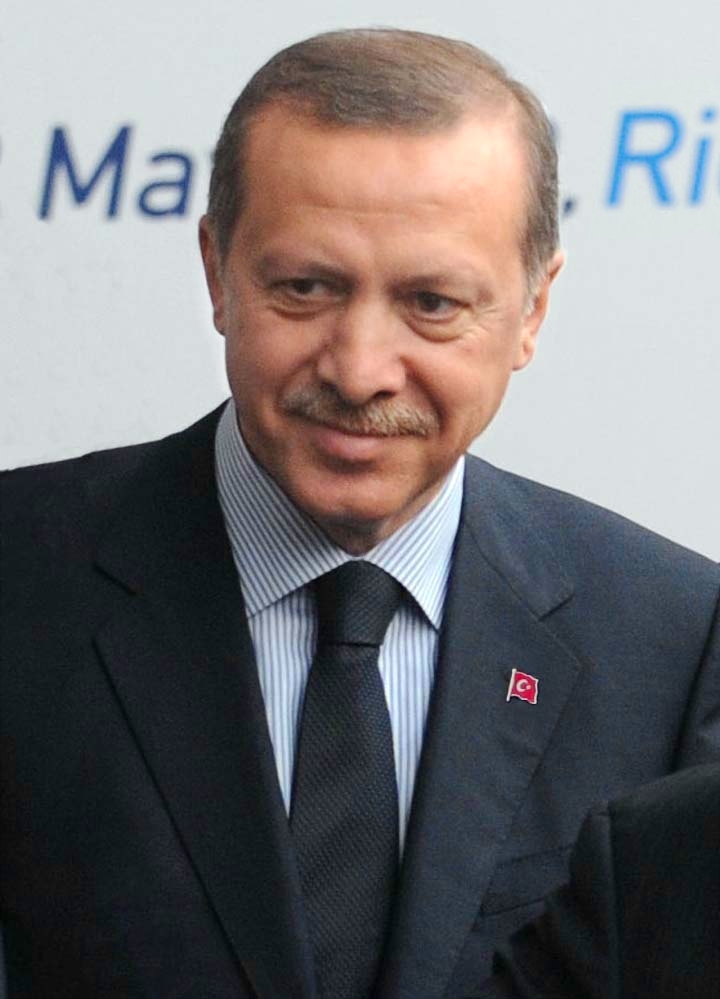
Turkish Prime Minister Recep Tayyip Erdogan
Turkish Prime Minister Recep Tayyip Erdogan was greeted by cheering crowds waving posters and chanting slogans. There were banners throughout the city showing Erdogan, in a blue shirt, with his right hand above his heart, and the phrase “Together, one hand for the future…”
Erdogan gave two talks, one at the Arab League, which was televised and carried word for word on Twitter, and another one at the Opera House before an audience of 2,000 public and political figures, activists and journalists. His visit, and comments on it, filled the airwaves and dominated the blogosphere for two days.
Many people compared the visit as equal in importance to that of President Obama in 2009.
Aside from his very real authority as the political leader of one of the most prosperous and stable countries in the Middle East, Erdogan is the leader of an Islamic party in a secular democratic state, so he is symbolically important for bridging the gap between Islamic politics and liberal democratic values–a division that has become increasingly polarizing in Egypt.
As with any piece of political theater, however, the event is open to multiple interpretations.
Ruling Military Council Reinvokes Egypt’s “Emergency Law”

General Mamdouh Shaheen announced that the military intends to make use of the Emergency Law rather than end it. Reuter photo.
One of the chief demands of the Jan 25th uprising was the insistence that the Emergency Law in place since 1981 be abolished. The Egyptian Constitution grants civilians many rights–the emergency law abrogates many of them in the name of national security.
The practical effect of the law has long been to protect military and police forces from punishment for almost any act, from extortion to torture.
In March, the Supreme Council of the Armed Forces vowed to abolish the Emergency Law by 30 September in accordance with the cnstitutional declaration passed last March.
However, on August 11, General Mamdouh Shaheen announced in a TV interview that the Emergency Law would not expire at the end of the month, and that the military would uses the Law’s authority to try rioters and protesters arrested over the Sept. 9-11 weekend in military courts.
The military justified the decision with reference the events of this month–labor strikes, a pro-democracy demonstration in Tahrir, a sit-in before the US embassy for the release of Sheikh Omar Abdel Rahman, and the invasion of the Israeli embassy by Egyptian protesters.
“What the Egyptian street is currently witnessing is terrorism,” said General Shaheen.
Coupled with recent crackdowns on the media, this decision has increased fears that the military is returning to the tactics and strategies of the mubarak regime.
Egyptian Cosmopolitans After September 11: Bonus Chapter
 “I was cooking dinner on Sept. 11th 2001, wondering why my wife and children were so late coming home, when the airplanes crashed into the World Trade center.
Dinner was cold by the time they finally arrived, well past seven p.m. local time in Cairo, although it was still morning in America…”
On the tenth anniversary of September 11th, here is a bonus chapter of Connected in Cairo that looks at the experiences of cosmopolitan Egyptians in the aftermath of the 2001 attacks in the United States.
Click here to download:
Global Identity and Modernity After September 11
In Connected in Cairo I argue that the delicate balance between being fully Egyptian and fully modern is fraught at every level with the possibility that in some context a person will come to be seen, by themselves as well as by others, as too local (which is to say, provincial and backward), or too foreign (which is to say, too Westernized).
To make this balancing act even more difficult, the imagined global others with whom one creates indexical links are themselves unstable. Fashions change, Consumer fads change. And the political and cultural fields that gives signs of foreignness particular values change with historical events such as September 11, the war in Afghanistan and the occupation of Iraq..
Because local cosmopolitan identities are forged through indexical links to the greater world outside Egypt, they are always contingent on shifts in how that world, or parts of it, are conceived and interpreted both by those who seek to create such identities and the larger social communities in which they are embedded. Even as upper middle and upper class Egyptians seek to frame themselves as cosmopolitans by using consumption practices to link themselves with the wider world, events can transform what those links mean, both to themselves and others, requiring sudden efforts to repair the breaches in the frames.
In this bonus chapter, I examine some of the ways Egyptian cosmopolitans rapidly remade themselves in the wake of the Sept. 11 attacks. I argue that these cosmopolitan Egyptians restyled themselves through sets of practices designed either to rebalance their relationship to the West, and especially to the U.S., or to reconfigure the meanings of the indexical signs by which they linked themselves to foreign places, or both. This effort involved not only efforts to rapidly remake self-identities but required rapid reassessments of what Sept. 11 itself meant for those links, and for the global and local worlds they construct.
Egyptian Media: “Things Remain Unstable”
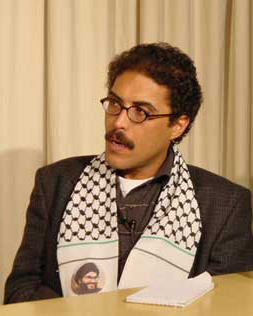
Khaled Dawoud (this is an older picture from an alumni event at AUC)
The web site “On the Media” has a 5 minute podcast on the current state of openness in the Egyptian media. The featured speaker is Khaled Dawoud, journalist for Al Ahram and Al-Jazeera, who says that despite a proliferation of new voices in the media, the military remains a red line journalists can’t cross.
“Things remain unstable in the Egyptian media as in the country in general,” Dawoud pointed out. “The Egyptian Armed Forces has started referring a few activists, bloggers, and even some freelance journalists, to military trials after writing some critical views and opinions of the military itself.”
On the role the military council is taking toward monitoring and censoring media, Dawoud said:
And especially people became more concerned recently after we saw one young activist who was referred to a military court simply because of a tweet, in which he was very critical of the military forces. And everybody said at that time that even the former regime wouldn’t refer people to military trials because of a tweet or because of some stuff she wrote on her Facebook page.
BROOKE GLADSTONE:
It sounds like what you’re saying is things are less free than they were back in April.
KHALED DAWOUD:
I wouldn’t go that far but definitely the military council proved to be impatient with their criticism and, you know, within all the problems that we’re having – lack of security, economic problems – we really wonder why are the military people taking the time to look into every single Facebook page or tweet by activists, instead of working on solving the problems of the country itself.
The “On the Media” reporter, Brooke Gladstone, is framing this interview as a taste of what the Libyan revolution must yet face as they seek to create a new government. She asks Khaled his advice:
They’ll find that the post-dictatorship period is not as easy as, as they might have hoped or aspired to. And they have to prepare themselves for an open society in which everything will be under observation, in which everything would be open for criticism and to be tolerant of that.
A graduate of the American University in Cairo’s Adhem Center for Television Broadcasting, Dawoud has held several positions with Al-Ahram, as well as with Al-Jazeera. Early on, he was a strong defender of Al-Jazeera’s independence from the strictures US media put on airing such things as the Bin Ladin tapes or images of dead US soldiers and civilian casualties. Since the uprisings, he has been a strong voice for a media in Egypt uncensored by the state.
Documenting the Egyptian Uprising
In my blog about the Egyptian National Archives collecting documentation of the uprising, I mentioned that I could find nothing on their web site about the effort (reported in a feature story in the Guardian). Several students asked me where on the web one could find archives. I recommend the following:

This Arabic language site archives scans from hundreds of documents seized by protesters from state security headquarters in the aftermath of Mubarak being ousted. The site’s creators have remained anonymous for their own safety. The site is designed to make sharing easy through a myriad of social media.
Center for Research Libraries Middle East and Islamic Resources
An initiative in Arabic by the Bibliotheca Alexandrina that seeks to integrate material on the revolution from across Egypt, including the stories of martyrs, along with other materials from the 200 year history of modern Egypt. There is also a webcast of the Library’s February Conference on Youth and Change, and the July 28 address by Joseph Stiglitz on “Egypt in a Changing World.”
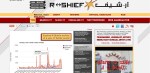
This is an ambitious data-mining project that draws content from Twitter and hundreds of other websites documenting not only Egypt but also in Tunisia, Lebanon, Yemen and elsewhere, and provides tool and visualisations to help analyze it.
Initiated in March 2011, Tahrir Documents includes scans of dozens of printed leaflets from Tahrir Square during the anti-Mubarak uprising, from religious tracts to lists of political demands. Most include complete English translation alongside scans of the original documents. The project is independent of any political organization.
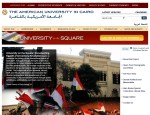
This is a collection of revolutionary narratives, photographs, videos, artifacts and memorabilia shared by faculty, students and alumni of the American University in Cairo.
And some I’ve already blogged about:
One of the first collections of photos and biographical notes on the martyrs of the revolution.
A collection of videos and photos from Tahrir Square during the urpising.
A Facebook page collecting graffiti and other graphic art of the uprising.
New Television Stations Under “Review” By Government
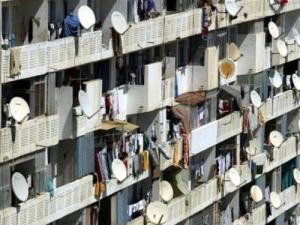
Satellite dishes in Cairo. Reuter photo borrowed from Al-Masry Al-Youm article
The ruling military council met with Prime Minister Sharaf for several hours Wednesday, Sept 7 to discuss “the deteriorating security situation” — by which they mean the ongoing strikes over economic conditions and protests over the failure of the council to lift emergency laws and stop military trials of civilians.
Among the six directives the council issued for the government to follow were two related to media. First, the government was ordered to stop issuing licenses for new television stations. While the government still controls the content of terrestrial channels, many independent satellite channels have been established and have, until now, enjoyed a relatively uncontrolled status.
The council ordered the government to begin reviewing licenses, with a view toward suspending channels that promote unrest. This, of course, is exactly what the Mubarak regime did with a number of television stations that were reporting on the protests.
The Minister of Information, Osama Haikal, assured reporters after the announcement that they had nothing to worry about because the Supreme Council of the Armed Forces believes in “freedom of expression.”
How Far Will the Clean Cinema Effort Go?
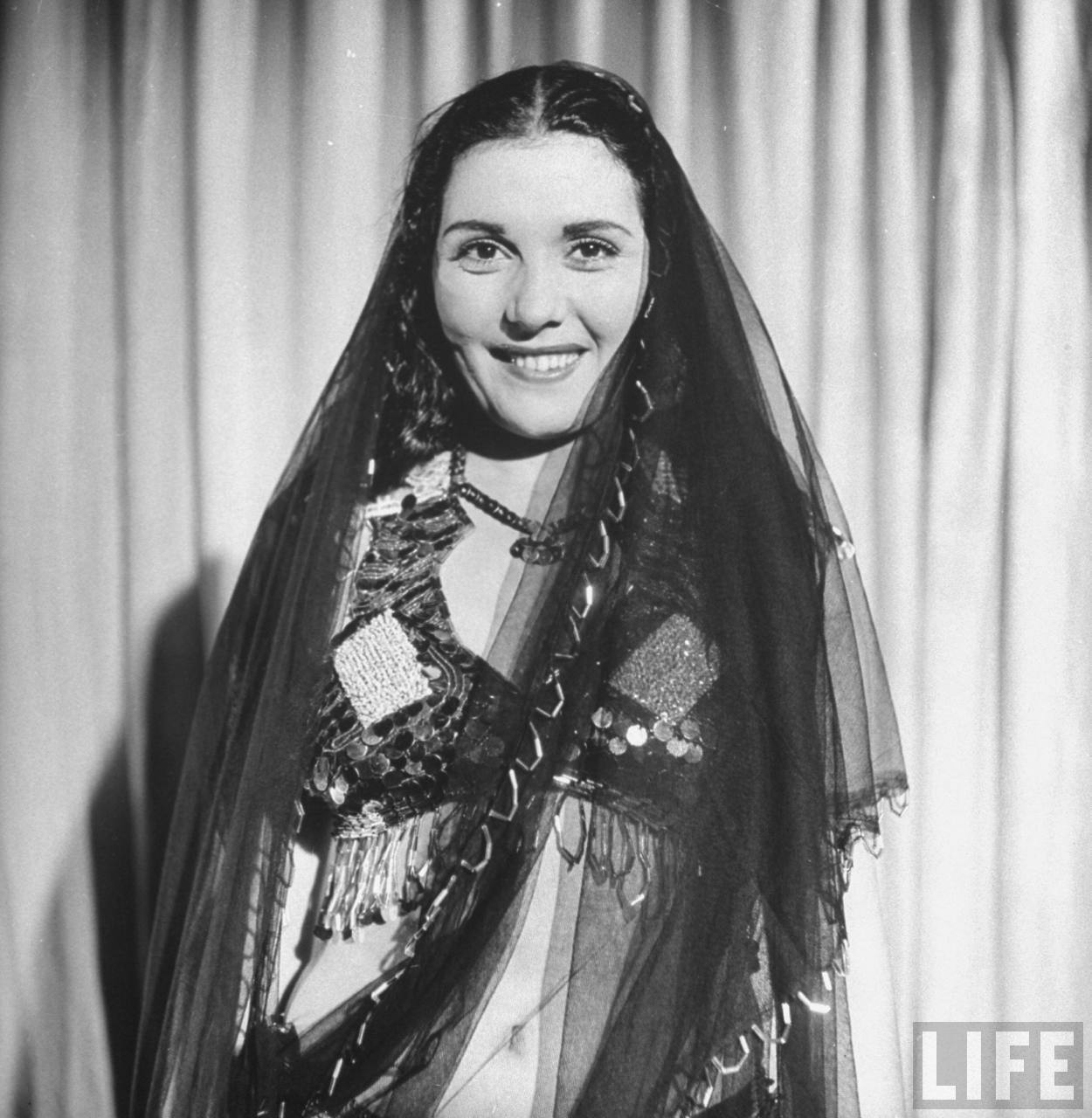
Are contemporary Egyptian films really any "dirtier" than classics starring such cinema lights as Tahia Carioca?
Whether or not they win a clear majority in Parliament, Islamists of various political persuasion, and particularly the Muslim Brotherhood, will clearly have greater political influence than ever before in the new Egypt. Some fear that this will push the “clean cinema” agenda, and interfere with Egypt’s moviemaking freedom.
According to a report by Ahmad Othman on the Saudi -owned Al-Arabiyya.net news website, many of the filmmakers releasing new movies over the Eid al-Fitr holiday–one of the top seasons for new releases–are falling all over themselves to assure people that their films “uphold clean art” and “do not harm moral values.”
Officially, the Muslim Brotherhood has never threatened direct censorship. Rather, the organization has called for a post-Mubarak Egyptian “engaged cinema,” exhibiting a creativity that is committed to the expression of moral values, according to former Deputy Mohsen Radhi of the Muslim Brotherhood.
Interestingly, Othman sites as an example producer Ahmad as-Sabki who is said to have stated of his new film (which I think is called Cabaret), “The theme is simple and funny. This movie is suitable for the Eid, it includes no indecent scenes and the audience will leave the theater satisfied.”
I think this statement may be taken out of context. I’m no fan of as-Sabki’s movies, but as an anti-censorship advocate, he’s been pretty outspoken, saying in interviews that if the Muslim Brotherhood runs this country and censors films he’ll quit the movie business and become a butcher.
As-Sabki has made similar statements in the past, but always in the context of denying Egyptian movies like his are as bad as the Muslim Brotherhood and similar critics say, never by way of pandering to the clean film crowd. His argument has always been that the accusations of films being “dirty” are exaggerated; that most are no more salacious than they were in the golden age of Egyptian cinema.
Egypt’s National Archives Documenting the Egyptian Uprising

Banner of martyr's photographs in Tahrir Square
Historian Khaled Fahmy has a difficult task: to document the Egyptian revolution for the National Archives–a branch of the Egyptian state–while avoiding the appearance that the government is trying to write–and hence control–the master narrative of the revolution.
Fahmy’s efforts are documented in an article in Britain’s Guardian newspaper

 CONNECTED in CAIRO